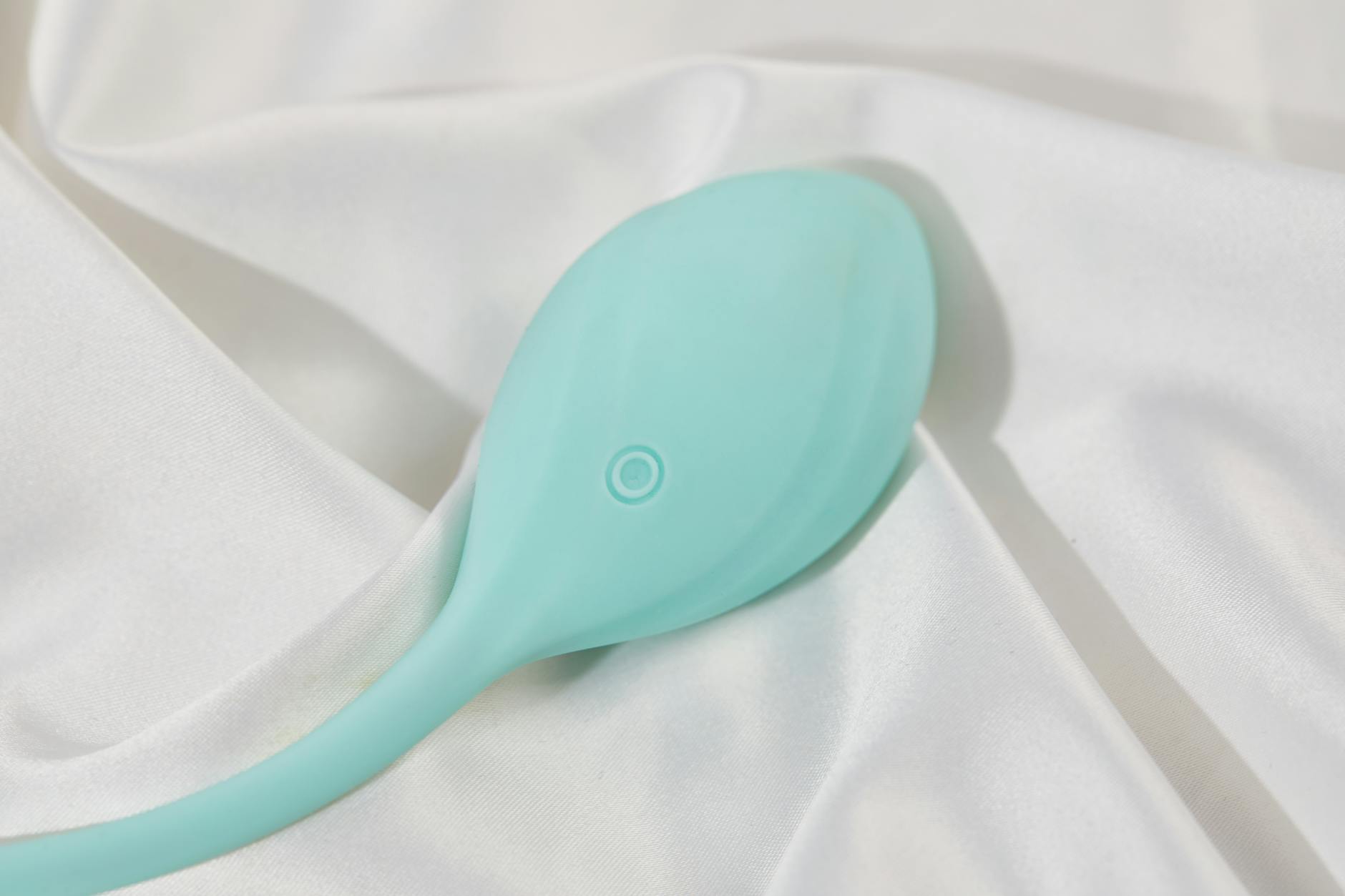
How to Choose a Lemon Vibrator If You Have Vulva Pain or Sensitivity
Pain doesn't mean you're broken. The right lemon clitoral vibrator, paired with patience and the right approach, can help you reclaim pleasure without compromise.
Vulva pain during sex or touch affects roughly one in four people with vulvas at some point. That's not rare. That's real, and it's treatable. The fact that you're reading this means you haven't given up on pleasure, and that matters more than you might think.
Here's what I've learned from two decades of working with couples navigating pain and intimacy: the right tool, the right information, and the right mindset can completely shift the experience. A lemon vibrator isn't a magic fix. But it's a genuinely useful entry point for people with vulva pain because of how it works mechanically. That's not marketing. That's anatomy.
Most traditional vibrators create friction. They buzz directly against tissue, which feels intense and can amplify pain if your vulva is already tender or inflamed. That's not a product failure. It's just how vibration works on sensitive skin.
Lemon clitoral vibrators like the Hello Nancy Lem use gentle suction instead. They create a soft, rhythmic pulling sensation that stimulates the clitoral nerves without the same mechanical pressure. For people with vulvodynia, vestibulodynia, or simple everyday sensitivity, this distinction is huge.
The suction movement bypasses the direct contact that triggers pain in many cases. You get stimulation, pleasure, and sensation without the assault-like intensity of traditional vibration. That's why lemon vibrators work better for sensitive clitoral tissue than many other options.
Not all vulva pain is the same, and your choice of toy should reflect that.
Provoked vestibulodynia (pain only with touch or penetration) often responds better to gentler, lower-intensity tools. This is where a lemon vibrator shines. Start with lower suction settings and build slowly.
Vulvodynia (spontaneous, generalized pain) might benefit from lemon clitoral vibrators too, but you may need longer warm-up time and a period of breaking in. Your nervous system has been in protection mode. It takes patience to teach it that sensation doesn't always mean harm.
Contact dermatitis or skin sensitivity to certain fabrics is different again. If your pain comes from reactions to materials, make sure your lemon sexual toy is made from body-safe silicone, which is hypoallergenic and won't react with lubricants.
Know what type of pain you're dealing with before you buy. Talk to a pelvic floor physical therapist or a gynecologist who specializes in pain. That conversation will guide which lemon adult toy features matter most for you.
Size and shape. Smaller is often safer. The Hello Nancy Lem is compact by design, which means less contact surface area and more precise stimulation. You're not trying to cover the whole area at once. You're learning to focus sensation.
Material. Silicone only. Nothing porous, nothing with a seam that could irritate. Check the product description. If it doesn't say "medical-grade silicone" or "body-safe silicone," move on.
Intensity control. This is non-negotiable. You need to start at the softest setting and work up. A lem vibrator with at least three speed settings gives you room to explore without jumping straight to intense.
Waterproofing. Easier to clean thoroughly, which matters if infection is a concern. Silicone toys rated IPX7 or higher can be submerged and cleaned under running water.
Noise level. Not directly about pain, but a quieter toy means less anxiety, and anxiety tightens the pelvic floor. That tightness amplifies pain. The quieter, the better.
If you've had vulva pain, your nervous system has learned to associate touch with hurt. Retraining that response takes time and gentleness.
Week one: exploration without the toy. Spend time (alone or with a partner) touching the areas around your vulva, not directly on it. This is about reconnecting with sensation as something that can feel good, not threatening. No pressure to feel pleasure. Just presence.
Week two: light external contact with your toy. Turn on your lemon clitoral vibrator at the lowest setting. Don't insert anything. Just let the suction create a gentle pull on the external tissue. Keep sessions short, 5–10 minutes. Stop if anything feels sharp or wrong.
Week three and beyond: gradual intensity. If week two felt good, try the next setting up. Extend time by a few minutes. This is not a race. You're teaching your nervous system that this sensation is safe.
If pain returns at any point, stop. Rest. Talk to your practitioner. Pain is information, not failure.
I know the template says water-based, and it does. But for vulva pain specifically, I need to emphasize this more: lubrication reduces friction, which reduces pain. Period.
Use a lot more than you think you need. Reapply during the session. If you're trying to solve pain, friction is the enemy. Lubrication is your ally.
Water-based lubes are safest because they won't degrade silicone toys. But if you have sensitivity to certain ingredients, check the ingredient list on your lube too. Parabens, glycerin, and nonoxynol-9 can irritate some people. Hypoallergenic, simple-ingredient lubes exist. Seek them out.
Here's something most toy reviews won't tell you: your brain is part of your sexual response. If you have a history of painful sex, your body has learned to brace. Your pelvic floor tightens. Your breathing gets shallow. Your mind runs through a checklist of "will this hurt?"
No toy fixes that directly. But the right toy, used with the right mindset, can help interrupt the cycle.
When you use a lemon vibrator and nothing hurts, that's not small. That's your nervous system getting new data. "Touch can feel good. My body is safe." That data gets filed away, and over time, the protective tension eases.
Pair the toy with practices that calm your nervous system. Deep breathing. A partner who understands consent and can pause whenever you need. Time. Kindness toward yourself when progress isn't linear.
If you're in a relationship, your partner's involvement changes the dynamic. Some guidance:
Keep it separate from "fixing" the relationship. Vulva pain is a health issue, not a relationship problem. It doesn't mean your partner is doing something wrong or that you don't want them. It means your body needs specific support.
Define "sex" differently during this period. If penetration or direct touch hurts, stop defining those as the goal. Pleasure looks different right now, and that's not less than. It's just different.
Give your partner a specific role if they're involved. "Please hold the toy at this intensity while I focus on breathing" is infinitely clearer than "I don't know, just try to help."
Remember: this is still your body. The goal is never to perform or accommodate. The goal is your comfort and, eventually, pleasure. If involving your partner creates pressure, go solo for now. That's the right choice.
Vulva pain steals something invisible: the assumption that your body will cooperate with you. After pain, even when it heals, there's often residual hesitation. A part of you stays braced, waiting for hurt.
Reclaiming confidence doesn't happen in one good session. It happens across dozens of small moments where you explore your body and nothing goes wrong. Where sensation builds into something good. Where you learn that your pleasure is worth the time it takes.
A lemon vibrator is a tool in that process. Not the whole process, but a useful one. Choose deliberately. Use patiently. Trust your body's feedback. You deserve this.
Yes, many people with vulvodynia find lemon suction toys more comfortable than traditional vibrators. The gentle pulling sensation often feels less triggering than direct vibration. Start at the lowest setting and expect a longer adjustment period. Your nervous system has been in protection mode, so patience is part of the protocol. If pain worsens, stop and check in with a pelvic floor physical therapist.
There's no fixed timeline. Some people feel comfortable in a few weeks. Others take months. What matters is consistency, not speed. Using your lemon clitoral vibrator once a week for 10 minutes over 8 weeks will do more for your nervous system than forcing an hour-long session that leaves you in pain. Listen to your body.
They work differently. Dilators are passive and focus on training the pelvic floor to relax and stretch. Lemon sexual toys add sensation and pleasure into the equation. Many people use both as part of a pain management approach. Some use just one. Your pelvic floor physical therapist can help you figure out what combination serves you best.
Absolutely. If you're sensitive to standard water-based lubes, try hypoallergenic brands or even coconut oil if you're using non-silicone toys (coconut oil degrades silicone, so stick to water-based with silicone toys). Some people with severe sensitivities do better with minimal or no lube, letting the silicone itself glide. The key is experimenting in a low-pressure environment to figure out what your body tolerates.
No. If your vulva is actively inflamed or in acute pain, rest it. Stimulation during a flare can intensify inflammation. But once you're past the acute phase and back to your baseline pain level, gentle exploration with a lemon clitoral vibrator at the lowest setting can sometimes help. It depends on your specific condition and your practitioner's guidance. Always ask before proceeding.
Yes, but communication is critical. You need to be able to say "stop" or "softer" in the moment without negotiating. Start with your partner using the toy on the lowest setting on the external vulva only. Let them know exactly how much pressure you can tolerate. If penetration or internal contact ever happens, it should only be if you've built up to it over weeks or months, with full consent and the ability to pause instantly.
If you're dealing with vulva pain, you don't have to navigate this alone. A pelvic floor physical therapist, a vulvovaginal pain specialist, or a sex therapist trained in pain can help you create a specific protocol. Reach out to our team if you want to talk through your specific situation. We're here.
Your pleasure matters. Your comfort matters. The right lemon vibrator, paired with patience and professional support, can help you reclaim both.