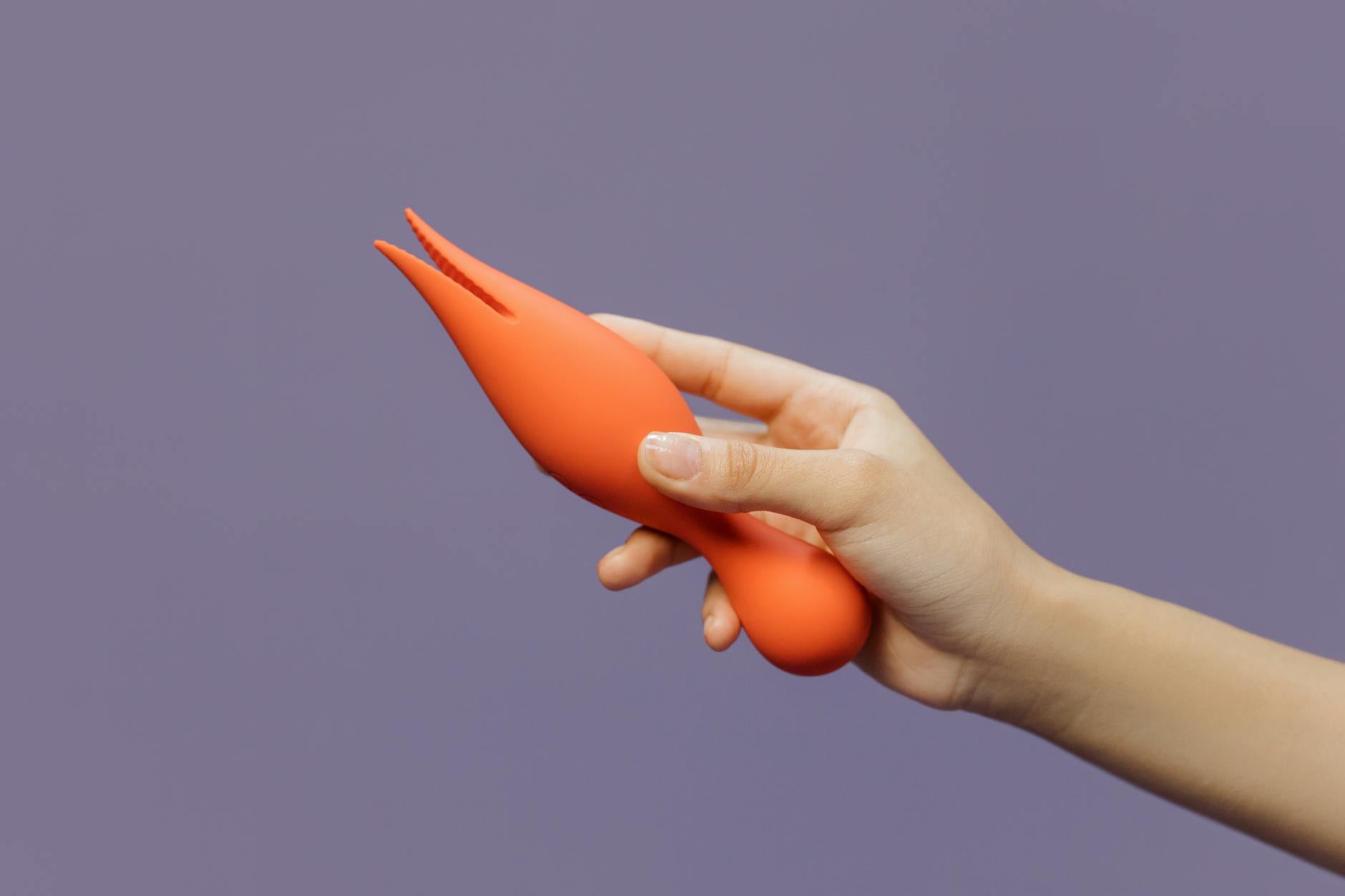
Let's get real about the silence
You want to introduce a lemon vibrator to your partner. You've thought about it. Maybe you've even looked at them online. And then you freeze because the conversation feels impossibly awkward, like you're suddenly a teenager asking someone to prom.
Here's what I know from years of working with couples: the fantasy of the conversation is always worse than the actual thing. Your brain is running a worst-case scenario loop. But most partners respond with curiosity, relief, or genuine interest once you actually say it out loud.
The block isn't usually the toy. It's the vulnerability of asking for something you want.
Why this conversation matters
Introducing a clitoral vibrator to partnered sex isn't about fixing something broken. It's about expanding what's possible together. Studies show that couples who communicate openly about pleasure have higher relationship satisfaction, stronger emotional intimacy, and more consistent desire over time.
But here's the part nobody talks about: your partner might feel threatened, inadequate, or confused about why you need it. Those feelings are real and valid. They're also almost always based on a misunderstanding of what vibrators actually do.
A lemon vibrator isn't a statement that manual stimulation isn't enough. It's an invitation to try something new together. That's a fundamentally different thing, and the way you frame it determines how they hear it.
The setup: timing and setting matter
Don't bring this up during sex. Not before, not after, not in the heat of the moment. You want their full, rational brain available. That means a calm conversation outside the bedroom, ideally when you both have time and emotional space.
Good timing: a lazy Sunday morning over coffee, a car ride, after dinner when the house is quiet. Bad timing: when they're stressed about work, right before bed, or during an argument.
The setting should feel safe and low-pressure. Not sitting on opposite ends of the couch staring each other down. Side-by-side or casual, so it feels like you're exploring an idea together rather than delivering news.
The opening that works
Forget the buildup. Skip the preamble. Start with something like:
"I've been thinking about something I want to try with you, and I want to be honest about it rather than pretend I don't think about it."
Or: "I found something that turns me on, and I'd love to explore it with you."
Or: "I want to try a lemon vibrator during sex. I think it would feel amazing, and I'd like to see what happens if we do it together."
Notice what's missing: apology, over-explanation, defensiveness. You're stating what you want clearly. That's it.
The actual toy conversation
Most partners don't know how clitoral vibrators work or why someone would want one. So explain it.
"A lemon vibrator uses suction and gentle vibration on the clitoris. It's not the same as what you can do manually. It's a different kind of sensation, and it usually gets me there faster. I don't need it instead of you. I want it with you."
If they ask why you want it: "Because I deserve to feel amazing, and this makes me feel amazing. And I want us to experience that together."
That's not selfish. That's self-knowledge. Your partner should want that for you.
The four most common reactions (and how to handle them)
"Am I not enough?"
This is the biggest one. Here's what you say: "You're my partner, not my only source of pleasure. Just like I enjoy things you can't do alone, this is something I want to experience with you. It's not a replacement. It's an addition."
If they're really stuck on it, you might say: "Think of it like going to a restaurant together. You make great food at home. But sometimes we want to try something new. That doesn't mean your cooking isn't good."
"That's kind of weird."
Maybe to them it is. They've never thought about it. Normalize it: "Millions of couples use vibrators. It's actually pretty common. I like that you're open to exploring new things with me."
"I want to get it for you."
This is often a control move, but sometimes it's genuine. If it feels genuine, let them if you want to. If it feels like they're trying to manage the dynamic, you can say: "I'd rather pick it out myself so I know it's exactly what I want. But I'd love for you to choose what we do together."
"Let's try it right now."
Maybe yes, maybe not. If you're not ready, say: "I want to, but I also want to feel relaxed and present when we do. Can we plan for it this weekend?" This gives you time to feel ready and lets them anticipate it.
The first time using it together
Don't make it a performance. You're not trying to prove anything.
Start with foreplay as usual. When you're already aroused and things are building, you can introduce it naturally: "I want to try the lemon vibrator now. Can you help?"
If they're involved (turning it on, holding it, watching closely), that usually helps them feel less like a bystander and more like a collaborator. Some partners want to hold it. Some want to be near you while you use it. Some want to watch. All of those are fine.
If it doesn't feel incredible the first time, that's normal. Your body might need to adjust to the sensation. Your brain might be self-conscious. Give it a few tries before you decide if you like it.
If you orgasm, great. If you don't, that's fine too. The goal isn't to perform. The goal is to explore together.
What to do if they still seem uncomfortable
Some partners need time. That's okay. You might say: "I know this is new. No pressure. But I'd like to try it because it's important to me. I'm happy to go slow and check in with you."
If they're genuinely closed off, you have a bigger conversation to have about whether you can ask for what you want in this relationship. But that's not usually about the vibrator. It's about intimacy and trust.
If your partner refuses entirely: you can use it alone. Your pleasure matters whether they're involved or not. And honestly, some couples find that one person exploring on their own takes pressure off partnered sex and actually improves it.
The ongoing conversation
Once you've introduced the idea, keep talking about it. "Did you like that?" "What did you notice?" "What would feel good next time?"
Maybe using a lemon clitoral vibrator becomes a regular part of your sex life. Maybe it's occasional. Maybe it stays a sometimes thing. The point is you're not guessing at what the other person thinks. You're actually talking about it.
That conversation skill transfers everywhere else. It's the foundation of partnership.
Frequently Asked Questions
Can I use a lemon vibrator if my partner isn't interested?
Absolutely. Your pleasure is not dependent on your partner's participation. Many people use lemon sexual toys alone, and many couples eventually warm up to the idea once they see their partner enjoying it. Start solo if that feels right for you. You're not asking permission.
Does using a vibrator make partnered sex feel less satisfying?
Actually, research shows the opposite. Couples who use vibrators together report higher satisfaction with both partnered and solo sex. The clue is that you're expanding what's possible, not replacing what already works.
What if I'm too self-conscious to actually use it with my partner?
Self-consciousness usually fades after the first or second time. Your nervous system calms down once it realizes nothing terrible is happening. If it persists, that's worth exploring with a therapist. But most people feel less self-conscious as arousal builds, so lean into foreplay and relaxation before introducing the toy.
Should I surprise them with a lemon vibrator or ask first?
Ask first. Surprises that involve your body are only sexy if you want them. Besides, the conversation is often less awkward than the surprise. When you talk about it, you're inviting collaboration. When you spring it on them, you're creating shock.
What if they want to use a vibrator but I don't like the idea?
That's fair. You get to have boundaries. But I'd encourage you to separate your discomfort from their desire. If they want to explore pleasure, that's not a threat to you. You can support their autonomy even if you don't participate. If it's truly a dealbreaker, that's a conversation worth having with a couples therapist.
How do I know which lemon vibrator to introduce to my partner?
Start with something straightforward and quiet. The Lem is a solid introduction because it's intuitive to use, not intimidating to look at, and the suction sensation is genuinely different from anything else. You don't need fancy. You need reliable and not overwhelming.
What if my partner wants to use a vibrator but I feel replaced?
That feeling makes sense, but it's worth examining. A vibrator is a tool, not a person. Your partner isn't cheating on you with a toy. They're exploring their body. If they want to use it together, that's actually an invitation to deepen your connection. If you're still struggling, couples therapy can help you work through the insecurity.
The bigger truth
Introducing a lemon vibrator to your partner isn't really about the toy. It's about asking for what you want. It's about believing you deserve pleasure. It's about trusting that someone who loves you can handle knowing what turns you on.
Most partners can. Most will. And the conversation that feels impossible right now will probably be one of the easiest, most connecting moments you have together.
Your pleasure matters. Saying that out loud matters even more.
If you want more guidance on navigating intimate conversations with your partner, reach out.