How to Use a Lemon Vibrator for Better Orgasms After Starting HRT
Hormone replacement therapy rewires arousal, sensation, and timing. Here's what actually changes and how to adapt your pleasure practice to match your new body.
Starting hormone replacement therapy is a whole-body reset. Your energy returns, mood lifts, and suddenly the world doesn't feel like you're moving through it at half-speed. But along with those wins comes something less discussed: your orgasms, arousal timing, and what turns you on might shift in ways that feel confusing if you're not expecting them.
This isn't a problem. It's information. And once you understand what's happening, you can adjust your pleasure practice to match your new body. That's where a lemon clitoral vibrator becomes genuinely useful. The technology—suction and pulsing patterns instead of pure vibration—works particularly well when HRT has changed how direct stimulation feels on your vulva.
Hormone therapy, whether estrogen, testosterone, or a combination, shifts three key things about how your body responds to touch and pleasure.
Sensitivity changes first. Estrogen increases blood flow to the clitoris and vulva, which sounds like it'd make sensation stronger. Sometimes it does. But it also means tissue becomes more reactive overall, which can make rough stimulation feel intense or even uncomfortable where it didn't before. This is temporary and normal as your body adjusts to new hormone levels—typically 4-8 weeks as everything settles.
Arousal timing lengthens, then often compresses. In the first month or two, some people notice arousal takes longer to build. This isn't low desire; it's your nervous system recalibrating. Once your body adjusts to HRT, many people report that arousal actually becomes faster and more reliable than it was pre-therapy. The difference is that your baseline has shifted.
Orgasm quality often intensifies. This is the part HRT advocates don't always advertise, but it's real. Increased blood flow, heightened sensitivity, and nervous system changes combine to create orgasms that feel sharper, deeper, or more full-body than before. It's not universal, but it's common enough that it's worth staying curious rather than assuming anything you experience is a loss.
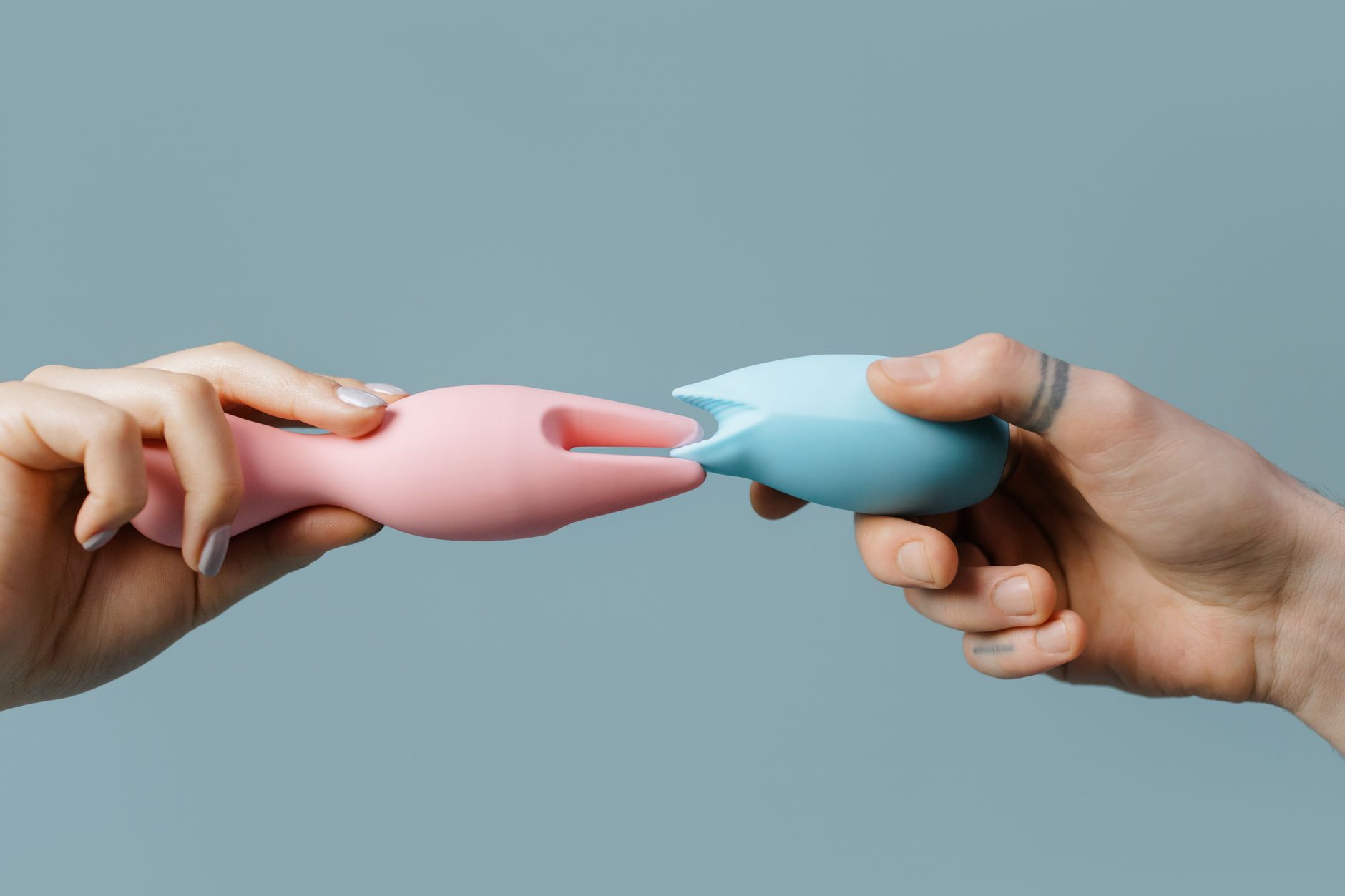
A lemon clitoral vibrator uses air-pulse technology—suction and release—rather than direct vibration. This distinction matters when you're on HRT because it lets you control intensity without harsh friction on newly sensitive tissue.
Here's the mechanical difference. Traditional vibrators move side to side or up and down at high frequencies. They work through direct contact pressure. A lemon sucker (like the Lem) stimulates through gentle suction pulses, which engage the clitoris without the same surface friction. When tissue is more reactive to HRT, this feels less abrasive and more nuanced.
Second, the suction mechanism actually works with increased blood flow rather than fighting it. HRT boosts circulation to the clitoris. Suction amplifies that response by creating gentle negative pressure, which your body interprets as heightened sensation. You get more stimulation from less mechanical force.
Third, you have granular control. Lem vibrators like those from Hallonancys typically offer 7-10 intensity levels. You're not choosing between "off" and "intense." You can start at level 2 or 3 while your body adjusts, then gradually increase as sensitivity stabilizes. Finesse beats force here.
This is the adjustment window where pleasure can feel unpredictable. You might find that what felt amazing a week ago now feels too intense, or vice versa.
Start lower than you think you need. If you've used vibrators before, assume you now need 2-3 levels lower than your previous sweet spot. This protects sensitive tissue and lets you rediscover what feels good as hormones settle. There's no prize for going hard.
Warm-up time matters more. As your nervous system recalibrates on HRT, arousal often builds slower than it used to. Budget 15-20 minutes of touch, breathing, or mental focus before introducing the lemon vibrator. This primes your nervous system and gives blood flow time to pool where you want it.
Lube is non-negotiable. Even with increased blood flow, the tissue changes happening during HRT transition mean natural lubrication can be inconsistent. Water-based lube protects sensitive vulva skin and makes suction feel smoother. It's not a sign of anything wrong; it's injury prevention.
Expect sensation to feel different, not worse. Your clitoris might feel more alert, more responsive to light touch, or sometimes slightly tender if overstimulated. This is your nervous system rewiring. It settles. Backing off intensity and returning in a few days usually resets things.
By now, your body has mostly adjusted to new hormone levels. This is when pleasure often gets interesting.
Most people find that arousal, once it starts, builds faster than it did in those first weeks. Your clitoris is more engorged with blood, sensation is clearer, and the nervous system has stopped flailing around trying to figure out what's happening. This is when you can experiment with intensity again.
Increases in testosterone (whether endogenous or prescribed) tend to shorten arousal time and intensify desire. If you're on testosterone, you might notice you want touch more frequently and that arousal happens faster. A lemon clitoral vibrator with multiple intensity levels lets you match that faster arousal without overshooting into overstimulation.
Your orgasms during this window often feel sharper and more localized than before, or sometimes more radiating and full-body. Both are normal. Some people experience multiple orgasms more easily on HRT. Others find that the single orgasm they have is so intense they need longer rest between. There's no hierarchy. Your pleasure isn't a competition metric.
Practice 1: The slow build. Start at intensity level 2-3 on the Lem, focus on breathing, and don't rush to increase. Let arousal build at its own pace. Many people find that when HRT has normalized, slow starts actually produce stronger orgasms than jumping straight to level 7. Your nervous system rewards patience.
Practice 2: Pattern switching. Most lemon vibrators offer multiple pulsing patterns, not just intensity levels. Switching patterns mid-session can feel revelatory. If you've hit a plateau at one pattern, changing to a slower or faster rhythm often reignites sensation. This is particularly useful when HRT has made you more sensitive to variation.
Practice 3: External-only focus. While you're adjusting to HRT, keep stimulation on the outer clitoris and vulva. Internal sensation might feel different during hormone transition, and external-only touch is where air-pulse lemon suction vibrators shine. Penetration can wait until you're solidly past the adjustment window.
Most HRT-related pleasure changes are temporary and expected. Three situations warrant a conversation with your doctor.
Pain during touch or orgasm that doesn't fade after 4-6 weeks. HRT shouldn't hurt. If tenderness persists or worsens, mention it to the provider managing your hormone therapy. Sometimes dose adjustment or a change in medication timing helps.
Orgasms that disappear entirely after being normal. Initial difficulty climaxing is common and usually resolves. Total loss of orgasmic response after weeks of adjustment might indicate that your HRT dose needs tweaking, or that something else (stress, other medications) is interfering. Worth investigating.
New pain or pressure during arousal. HRT increases blood flow and tissue responsiveness. Occasionally, this means existing pelvic floor tension becomes more noticeable. A pelvic floor physical therapist can help you release tension that HRT has made more apparent.
Once you're past the adjustment phase—usually around month 3—pleasure typically stabilizes into a new baseline that many people find richer than before HRT.
Your clitoris is more engorged. Sensitivity is more refined. Arousal is usually more accessible. Orgasms often feel more intense. A lemon vibrator becomes less of an adjustment tool and more of an enhancement tool. You're not managing discomfort; you're amplifying what's already working.
At this point, you know your new body. You understand how long arousal takes now, how your clitoris responds to pressure, which intensity levels feel best, which patterns create the strongest sensations. You've answered the question: who am I sexually now that my hormones have changed. And the answer is usually: someone with more access to pleasure, not less.
Yes, but start lower than you think you need. Tissue is more reactive during the first 4-8 weeks, so intensity level 2-3 is a good entry point even if you used higher levels before. Once your body adjusts, you can increase as sensation stabilizes. A lemon sucker's gentle suction is actually ideal during early HRT because it's less abrasive than traditional vibration on newly sensitive tissue.
Usually, yes. In the first 4-8 weeks, arousal often takes longer as your nervous system recalibrates. After that adjustment window, most people find that arousal becomes faster and more reliable than before HRT. The timeline varies by person and by which hormones you're taking, but by month 3-4, the new baseline is usually clear. This is when curiosity beats assumption.
Almost certainly, yes. They might feel sharper, more intense, more localized, or more full-body depending on your neurology and hormone levels. Some people experience multiple orgasms more easily. Others find that single orgasms are so intense they need more recovery time. None of these variations are better or worse. Your job is to notice what's happening and adapt your technique accordingly. A lemon vibrator with multiple intensity levels and patterns gives you tools to explore that adaptation.
Water-based lube works with all silicone toys and is safest during HRT transition when tissue is more reactive. Silicone-based lubes feel richer but can degrade silicone toys over time. Stick with water-based. Hyaluronic acid lubes are particularly good because they mimic natural lubrication and rehydrate tissue, which can be helpful during hormone changes. Avoid anything with glycerin if you're prone to yeast infections, as HRT can shift your vaginal microbiome temporarily.
HRT-related pleasure shifts are normal for the first 8-12 weeks. After that window, if pain appears, if arousal completely disappears, or if something feels functionally wrong (not just different), mention it to whoever prescribed your HRT. A small dose adjustment or timing change sometimes makes all the difference. You shouldn't have to white-knuckle your way through months of pain or dysfunction when solutions exist.
Absolutely. In fact, many people find that their partners become more interested when HRT boosts desire or changes sensation in noticeable ways. The lemon vibrator becomes a shared tool rather than a solo thing. Just keep communication clear about intensity levels and what's comfortable that day. HRT can make sensitivity variable day-to-day, so what felt perfect last week might need adjustment this week. That's fine. Adapt together.
Hormone replacement therapy changes how your body experiences pleasure. Tissue becomes more reactive, arousal timing shifts, and orgasms often intensify. A lemon clitoral vibrator is a smart tool during this transition because its suction-based technology is gentler on newly sensitive tissue than traditional vibration, and the intensity levels let you match your pleasure practice to your changing body.
The first 4-8 weeks are adjustment time. Start low on intensity, warm up longer than before, use lube, and stay curious. By month 3-4, you'll have found your new baseline. Most people find that baseline includes better access to pleasure and more intense orgasms than they had before HRT.
Your pleasure matters during this transition. You deserve a tool and a practice that works with your body, not against it. If something's not working, shift it. If something feels unexpectedly amazing, lean in. You're not recovering your old sexuality. You're discovering your new one.
If you have questions about your HRT or how it's affecting your body, reach out to a healthcare provider who knows your history. If you want to explore tools that work with your changing body, Hallonancys makes lemon vibrators built for precision and control. Start where you are. Adjust as you go. Your pleasure is worth the attention.