
Orgasms don't expire at 50
Let's get the obvious lie out of the way first: your best orgasms are behind you. They're not. What changes after 50 is not your capacity for pleasure. It's your access to the right information and tools.
I work with women in their 50s, 60s, and beyond. The most common thing they tell me is not "I can't orgasm anymore." It's "I thought I couldn't, but then things shifted." That shift is almost always about understanding what's actually happening in your body and finding a method that works with those changes, not against them. A lemon clitoral vibrator often becomes that method.
What actually happens to your body after 50
Your estrogen levels are lower. Your testosterone is lower. Your skin is thinner. Your pelvic floor muscles have lost some tone. These are biological facts, and they matter.
Here's what doesn't happen: you lose the neural pathways that create pleasure. You don't lose sensitivity in the clitoris. You don't lose the ability to orgasm. What you lose is speed. Most women over 50 need longer to warm up, and the orgasm itself may feel different. Not worse, usually. Different.
Many of my clients describe post-50 orgasms as deeper, more whole-body, less dependent on friction and more responsive to emotion and attention. That's not poetic nonsense. That's a neurological shift that makes sense when you understand that your brain is now doing more of the work and your hormonal system is doing less.
Why a lemon vibrator works so well for bodies over 50
A traditional vibrator often doesn't. It relies on speed and intensity. After 50, speed can feel too harsh. Your clitoral tissue is more delicate, and the sensation can range from overwhelming to numb depending on where you are in your cycle and your stress level.
A lemon clitoral vibrator, specifically the Lem by Hallonancys, works differently. It uses air-suction technology instead of raw vibration. Think of it as a gentle, rhythmic squeeze rather than buzzing. This approach has three advantages for your body right now.
First, it doesn't require friction. Your skin appreciates that. Second, the sensation feels more nuanced. You can feel multiple layers of sensation instead of just surface buzzing. Third, it builds arousal gradually rather than expecting you to jump straight to intensity.
The warm-up timeline shifts (and that's actually great)
When you were 25, arousal might have happened in five minutes. Now it takes 15 to 25. Many women apologize for this. Don't.
This longer warm-up is not a bug. It's a feature. It forces you to slow down, to pay attention, to actually be present in your body. Partners often report that sex gets better after 50 because there's less rushing and more real connection.
Start with a lemon vibrator at the lowest setting. Spend time with that setting. Let your body adjust. Most women over 50 find that patterns 1 through 3 on a Lem give them everything they need. You might never reach pattern 5. That's completely normal and fine.
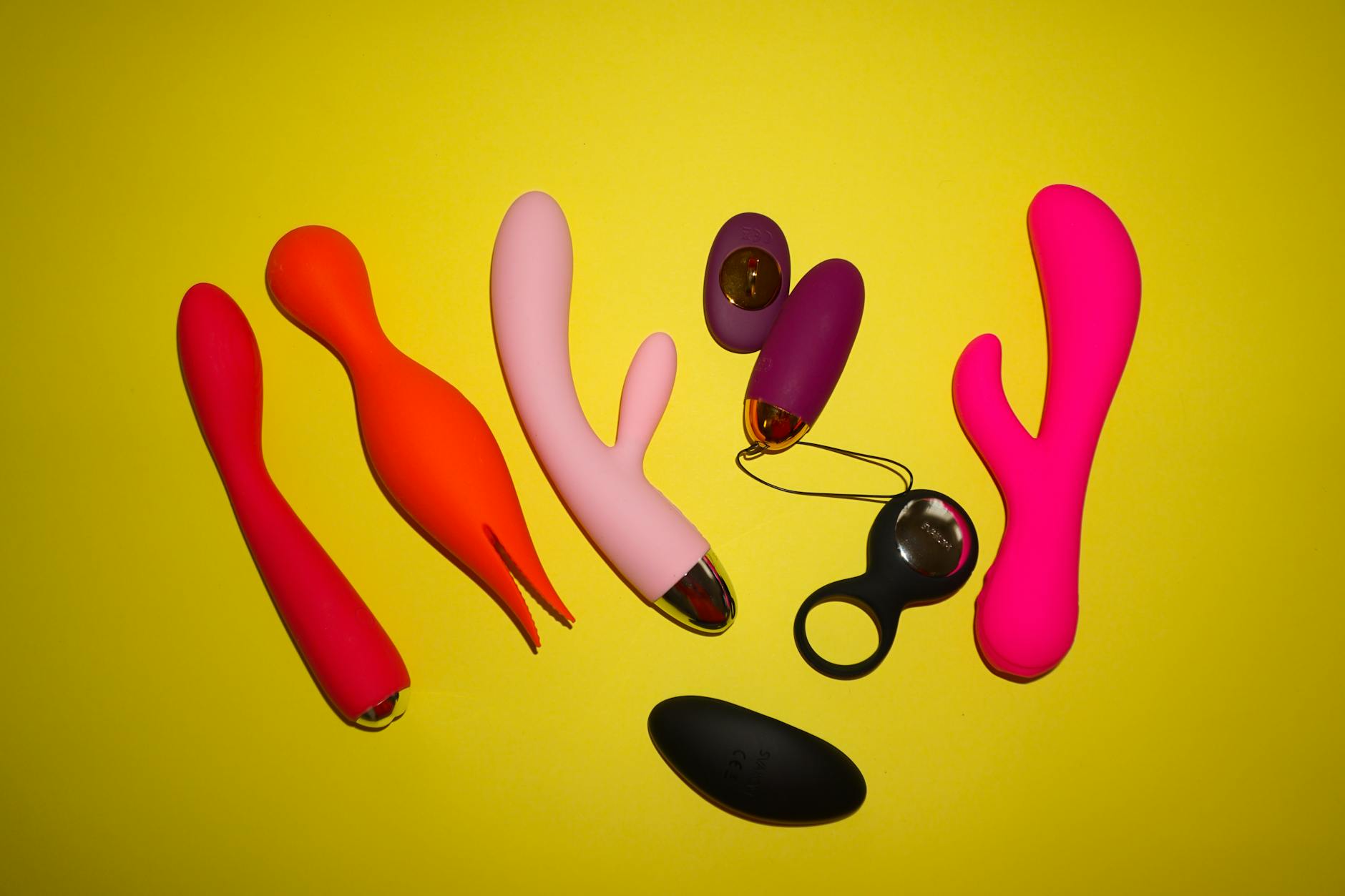
Photo by FounderTips on Pexels
Lubrication matters more, and that's not weakness
Your body produces less natural lubrication after 50. Some women produce almost none. This is not a personal failing. It's biology.
Water-based lubricant stops being optional and becomes essential. Use it generously. The more, the better. Apply it to the toy and your body. Reapply during longer sessions. A lemon clitoral vibrator with proper lubrication becomes infinitely more effective because the suction works better when there's moisture. The glide is smoother, the sensation is deeper, and you're less likely to feel irritation afterward.
If you're in a long-term relationship and you suddenly need lube after decades of not needing it, your partner needs to hear this clearly: it's not about them. It's about your body's natural shifts. Partners who make this about their ego instead of your pleasure are missing the point. A good partner will apply the lube themselves and move forward.
The psychological shift that matters most
After 50, something often unlocks. You stop performing for other people. You stop worrying about whether you're taking too long. You stop pretending you like something you don't. For many women, this is the first time in their sexual life they're actually advocating for themselves.
That psychological freedom alone changes everything. When you're not running a parallel commentary in your head about whether your body looks okay or whether you're being too demanding, your nervous system can relax. And when your nervous system relaxes, orgasms come easier.
A lemon vibrator paired with this permission you're now giving yourself often produces the strongest orgasms of your life. I've heard this enough times that it's not anecdotal anymore. It's a pattern.
When to use it solo versus with a partner
If you're partnered, solo exploration first is often the right move. Learn your body. Figure out what patterns work, how long your warm-up takes, where you like pressure. You can't teach someone else if you don't know yourself.
Then bring the tool into partnered sex. Some partners feel insecure about toys. The conversation is simple: this isn't about them. This is about you having access to the kind of stimulation your body responds to right now. If your partner can't get on board with that, that's a different conversation entirely.
How to integrate it into your routine
Start by setting aside time. Not "squeeze it in when the mood strikes." Actual time. Twenty to thirty minutes where you're not going to be interrupted. Take a warm bath first if you want. Put your phone away. Make your space comfortable.
Apply lubricant. Start at pattern 1. Breathe. If nothing happens for ten minutes, that's fine. You're not trying to come. You're trying to be present. Many women over 50 find that orgasm comes as a surprise after they've stopped trying to make it happen.
If you're with a partner, they can apply the lubricant, control the toy, and focus on you. Some women find that a partner using a lemon clitoral vibrator on them feels more intimate and connected than any other kind of partnered sex.
When to check in with a doctor
If you're experiencing pain, itching, or persistent dryness that doesn't improve with lubrication, mention it to your doctor. Genitourinary syndrome of menopause is common and treatable. A good GP or gynecologist can offer topical estrogen treatments that make a real difference.
If you're on medications that affect sexual function, ask your doctor about them directly. Some medications lower desire or make orgasm difficult. Sometimes there's a timing adjustment that helps, or a dose change, or an alternative. You deserve to have this conversation.
Why your body isn't broken, it's just different
Everything I've described here isn't damage. It's evolution. Your body at 50 or 60 has a different relationship with pleasure than it did at 25. It's slower, more nuanced, more whole-body, more dependent on emotion and attention.
A lemon clitoral vibrator is designed to work with these changes, not against them. The suction-based technology, the multiple patterns, the gentle approach. It's not a workaround for a broken body. It's a tool built for the body you actually have.
Your orgasms aren't behind you. They're waiting for you to slow down enough to find them.
People also ask
Can you use a lemon vibrator every day after 50?
Yes. Daily use is fine and often beneficial. Regular stimulation can actually help maintain clitoral health and sensitivity. The key is using lubrication and not pushing through pain. If you notice any irritation, take a day off and use extra moisturizer. Listen to your body, not a schedule.
Do orgasms feel different after 50, and is that normal?
Completely normal. Many women describe post-50 orgasms as more diffuse, less centered in one area, and sometimes longer. Some feel more emotional. Some feel quieter. All of these variations are normal. What matters is whether they feel good to you, not whether they match some imaginary template.
Will using a lemon vibrator decrease sensitivity over time?
No. In fact, the opposite is often true. Regular stimulation keeps tissues healthy and responsive. Using a lemon clitoral vibrator maintains blood flow and neural activation. The concern about desensitization is mostly myth. Your body adapts to patterns, but switching patterns keeps things interesting.
How long does it take to orgasm with a lemon vibrator after 50?
There's no standard timeline. First-time users often need 10 to 25 minutes. Some women need longer, especially if they're new to vibrators or if they're stressed. The best approach is to remove any timeline expectation. Set aside time and see what happens. Pressure about duration almost always makes things harder.
Is it okay to use a lemon vibrator if you're on hormone therapy?
Yes, absolutely. Hormone therapy changes how your body responds, and those changes shift over time. Some women on HRT find vibrators easier to use. Some find they need adjustment. A lemon clitoral vibrator is flexible enough to work as your body changes. If you've just started HRT, give your body a few weeks to stabilize before assuming what will and won't work.
What if your partner thinks using a vibrator means they're not enough?
That's their insecurity, not your problem. Your body has legitimate needs at 50 that are different from what they were at 30. A partner worth keeping will understand that adding a tool doesn't subtract from the relationship. If they won't budge, that tells you something important about the relationship itself.
The bottom line
After 50, your body is not less. It's different. A lemon vibrator is designed to work with your body as it actually is, not as you wish it were or as it used to be. Slower warm-ups, gentler sensation, longer sessions, more lubrication. These aren't compromises. They're features.
Your best orgasms might still be ahead of you. You just need the right tool and the right information. Both are here.
If you're curious about how a lemon vibrator might work for you, start with exploration. There's no rush, no timeline, no way to do this wrong. Your pleasure matters now as much as it ever did. You deserve to experience it.