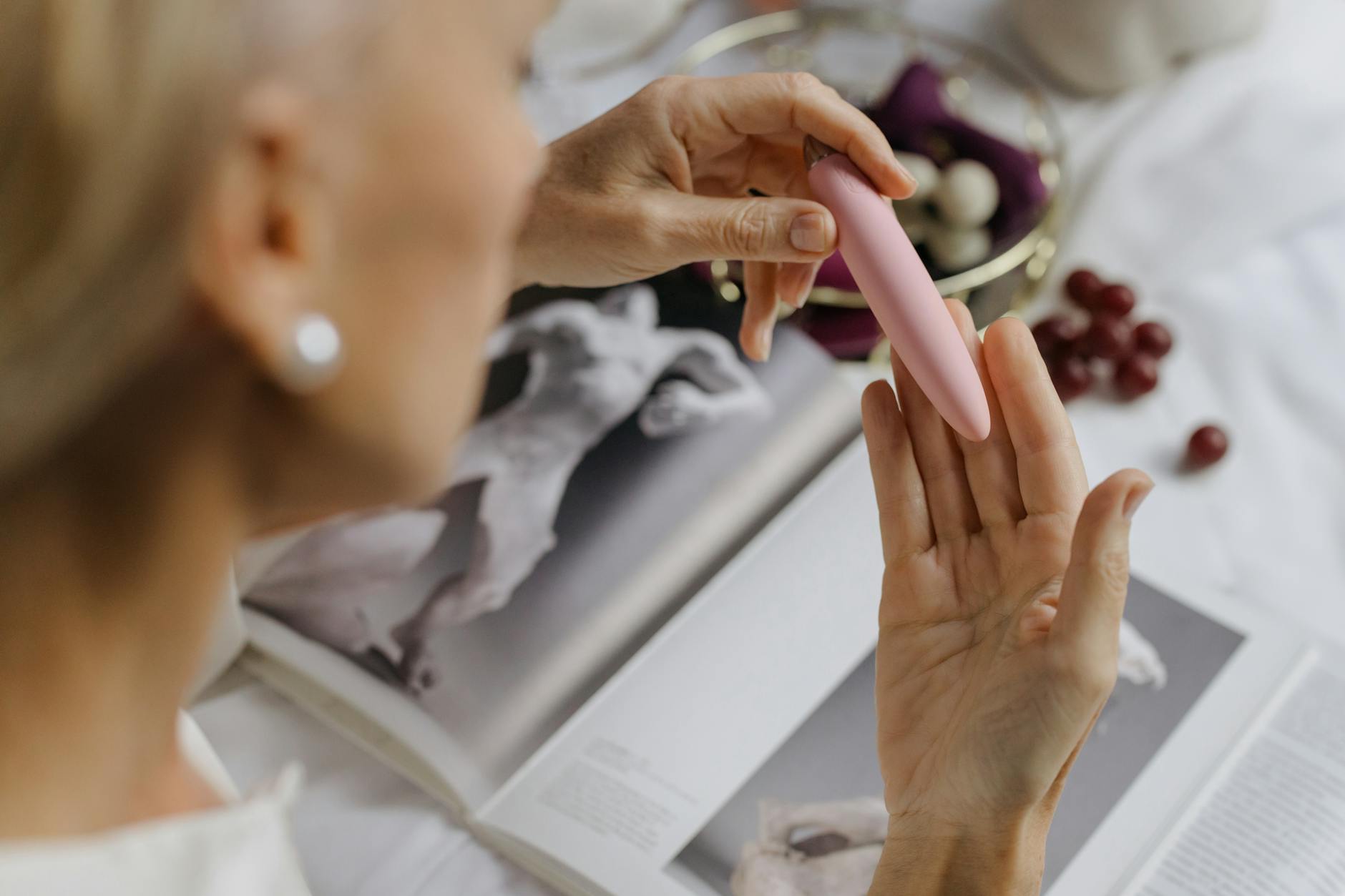
How to Use a Lemon Vibrator When Arousal Rebuilds Slowly After Trauma
Let's be real. Rebuilding arousal after trauma isn't linear, and it sure as hell isn't something you rush.
Trauma changes how your nervous system talks to your body. Arousal involves trust, sensation, and the ability to be present. When those things have been disrupted, you don't just flip a switch and get them back. But you can rebuild them. Slowly, safely, on your terms.
I've worked with many clients navigating this exact terrain. The ones who find success are the ones who stop thinking of pleasure as a destination and start thinking of it as a series of small, controlled experiments. A lemon clitoral vibrator, with its gentle suction and manageable intensity levels, can be a surprisingly good tool for that work because it gives you granular control and immediate feedback from your body.
Here's what that process looks like, step by step.
Why trauma changes arousal response
Trauma lives in the nervous system. When you've experienced sexual harm, your body learns to protect itself by staying hypervigilant, numb, or somewhere in between. Arousal requires a shift into parasympathetic activation (the rest-and-digest state), but trauma keeps you camping in the sympathetic nervous system (fight-or-flight).
The result: difficulty with erection, lubrication, sensation, orgasm, or all of the above. Sometimes it's total numbness. Sometimes it's flashbacks during moments that should feel good. Sometimes it's both.
The good news is that your nervous system is trainable. With repetition, safety, and choice, you can gradually retrain your body to associate arousal with safety instead of threat. That's not therapy talking. That's neuroscience.
Creating the container: physical and emotional safety first
Before you even touch a toy, you need three things: privacy, time, and the absolute certainty that you can stop whenever you want.
Privacy means nobody walks in. No partners in the other room. No roommates upstairs. If you have a family, this might mean waiting until everyone is asleep or out. That's not excessive. It's foundational.
Time means you're not rushing. Trauma recovery arousal needs 20 to 45 minutes of uninterrupted space. You're not timing yourself. You're giving your nervous system room to settle.
The ability to stop is non-negotiable. You get to pause, put the toy down, walk away, and come back tomorrow. There's no performance metric. Your only job is to notice what your body is telling you.
Why the Lem works for trauma-informed exploration
A lemon sucker like the Lem operates differently than a traditional vibrator. Instead of rhythmic buzzing, it uses gentle air-pulse suction that you control completely. You start at pattern 1 (barely-there) and build up if you want to.
That matters for trauma recovery because:
Control. Every pattern change is your choice. You're in charge of intensity every second. That reclaims agency in a body that may have had agency taken from it.
Immediate off-ramp. If sensation triggers a flashback or freeze response, you press the button and it stops. No buzzing in your hand, no needing to remember a power-down sequence. Off. Done.
Gradual intensity. Starting at pattern 1 lets your nervous system acclimatize. You're teaching your body that sensation can be safe, small, and stoppable. That's the core message trauma recovery needs.
Sensation without pressure. Air-pulse suction feels different than direct vibration. Some survivors find it less triggering because it's less "intense" or "invasive" feeling. Worth noting that sensitivity varies wildly, but the Lem's design gives you options.
The four-week timeline for rebuilding
I'm giving you a suggested timeline, but your timeline might be three months or three years. Ignore the clock. Follow your nervous system.
Week 1: Familiarity without use
Unbox the toy. Hold it. Turn it on at pattern 1 while it's in your hand. Listen to it. Notice what your body does when it hears that sound. Does your chest tighten? Do you feel neutral? There's no right answer.
Put it back in its box. That's the whole exercise. You're teaching your nervous system that this object exists, it's yours, and it doesn't hurt you.
Do this once or twice. Don't push it.
Week 2: Sensation exploration without insertion
Now you get to touch yourself, but not with the toy yet. This is about remembering that your body can feel good sensations. Spend 10 minutes touching your thighs, your breasts, your stomach. Anywhere except your genitals. Notice temperature, texture, pressure.
The goal isn't arousal. It's sensation mapping. You're rebuilding the neural pathway between touch and safety.
When you're ready (no rush), hold the Lem at pattern 1 on the outside of your vulva, still clothed or with underwear on. You're adding one tiny variable: the toy is there, and it's at its gentlest setting. That's it.
Stop whenever you want.
Week 3: Gentle contact at low intensity
You can now apply the Lem directly to your vulva at pattern 1 or 2, with plenty of lube. Spend 5 to 10 minutes just sitting with sensation. No goal. No orgasm target. Just noticing.
If you feel safe, you might move to pattern 3. If not, pattern 1 is fine for another week. There's no rush to intensity.
During this phase, write down what happens. Did you feel numb? Aroused? Anxious? Flashbacks? All okay. You're gathering data.
Week 4 and beyond: Building stamina and pleasure
By now, your nervous system has had repetition: the toy is safe, sensation is safe, you're in control. You might start noticing arousal building, or you might still feel numb. Both are normal.
Increase patterns slowly. Spend longer. Explore different positions or pressures. But only if it feels good. If flashbacks appear, dial it back. Your nervous system is telling you something.
What to do if flashbacks or freeze responses happen
This is the hard part, and it's also the most important part.
Flashbacks mean something in the sensation or context reminded your nervous system of the trauma. Freeze responses mean your body went into shutdown. Both are completely normal and completely manageable.
When it happens: stop immediately. Put the toy down. Ground yourself.
Physical grounding: feel your feet on the floor. Name five things you can see. Hold ice. The point is to remind your nervous system that you're safe and present, not back in the trauma.
Emotional grounding: remind yourself out loud. "I'm safe now. This is 2026. I'm in my home. Nobody is here but me."
Then take a break. Not forever. Just that day. Come back when you're ready.
If flashbacks become frequent, work with a trauma-informed therapist before continuing exploration. They can help you process the original event and build tolerance more safely.
The role of a partner in this process
If you have a partner, their job is to support, not participate (unless you explicitly ask). That means:
They know you're doing this work. You don't have to hide it. Shame delays healing.
They don't ask to watch or participate unless you invite them. Your body, your timeline, your choice.
They understand that rebuilding arousal is not about their needs. It's about your nervous system. If they make this about their desire to have sex with you, you have a different problem than trauma recovery.
Practical setup: lube, boundaries, and timing
Use water-based lube, even if you're making your own lubrication. Your healing nervous system benefits from extra glide. More lubrication means less friction, which means less chance of pain triggering a stress response.
Put your phone on do not disturb. Actually lock the door. Tell anyone in the house you need an hour alone. These aren't paranoid. They're the conditions under which your nervous system can actually relax.
Choose a time when you're naturally calm. Not when you're wound up from work or stressed about kids. Evening, or whenever your nervous system is already settling down.
The long game: pleasure is possible
I've watched clients go from unable to touch themselves to having profound orgasms. It takes months or years sometimes. But it happens. Your body hasn't forgotten how to feel good. It's just learned to be cautious first.
A lemon clitoral vibrator becomes a tool for teaching safety through sensation. Pattern by pattern, session by session, your nervous system learns: this sensation is safe. This choice is mine. This pleasure is available to me.
That's not sex therapy language. That's survival and resilience.
FAQ: Lemon Vibrators and Trauma-Informed Pleasure
Can I use a lemon vibrator if I haven't processed my trauma with a therapist yet?
Yes, but slowly. Therapy and self-exploration can happen in parallel. Start with the week-by-week timeline above. If flashbacks are severe or frequent, pause and prioritize therapy first. You're not failing. You're being smart about sequencing.
What if I feel nothing at all, even at higher patterns?
Numbness is a trauma response. It's protective. Your nervous system is saying, "Not yet." Keep going with the low-intensity exploration. Numbness often shifts to sensation over weeks or months. If it doesn't shift after consistent practice over several months, talk to a trauma-informed therapist or gynecologist. Sometimes medication changes or physical pelvic floor work help.
Is it normal to feel arousal and then lose it suddenly?
Completely normal. Trauma nervous systems are unpredictable. You're aroused, then a small thing happens (a sound, a memory, a sensation) and you're out. That's not failure. That's your nervous system still healing. Keep going. It gets easier.
Can I use a lemon vibrator with a partner watching or touching me?
Not yet. Solo exploration first. Once you've rebuilt arousal solo (usually a few weeks to months), you can invite a partner in, but they should be in support mode, not in the scene. Some survivors never want a partner watching. That's also okay. Your boundaries are law.
What if I'm having nightmares or panic attacks during this process?
Talk to your therapist immediately. Those are signs that the pace is too fast or that you need more support before moving forward. Slowing down isn't quitting. It's being in relationship with your own healing.
How do I know when I'm "ready" to move to the next week in the timeline?
You're ready when you've done the current week without major distress and you actually want to go further. Not pressure. Not "I should." Genuine curiosity or desire. If you're hesitating, stay where you are. Your body knows.
Healing isn't about speed. It's about safety, repetition, and reclaiming permission to feel good. A lemon vibrator is just the tool. You're the expert on your own body.
Start where you are. Go at your pace. Your nervous system will let you know when it's time to move forward.