Let's name what's actually happening
You're having sex with your partner. They're finishing. You're not. And somewhere between the third time you've faked an orgasm and the hundredth time you've settled for "close enough," you stopped asking yourself if this was okay and started assuming it was just how things work.
It's not. And a clitoral vibrator changes the entire equation.
Here's what I see in my practice: one partner orgasms consistently, the other doesn't, and nobody talks about it directly because it feels less like a problem and more like the default. The partner who isn't finishing stops initiating. Sex becomes something that happens to them instead of something they want. Over time, that absence of desire erodes the whole relationship. Not because the sex is bad, but because it stopped being mutual.
Why partnered sex often becomes one-sided (and it's not your fault)
Three structural reasons this happens:
First, penetration is the default script. It works efficiently for the partner with a penis and often does almost nothing for the partner with a clitoris. That's not a design flaw in your body. It's physics. The clitoris needs direct stimulation, and the angle, depth, and speed of penetration rarely provides it naturally. When one partner's pleasure pathway requires basically zero effort and the other's requires intention, guess whose pleasure tends to get sidelined?
Second, there's a myth floating around that if you're truly relaxed and attracted, you'll orgasm from penetration alone. That's false. Maybe 25 percent of people with vulvas can orgasm from penetration without additional clitoral stimulation. Meaning 75 percent of you are working against a narrative that tells you something's wrong with you, when actually something's wrong with the script.
Third, once sex becomes routine, it becomes efficient. You settle into patterns that work, even if "work" just means "eventually end." Changing that pattern feels risky. What if bringing in a vibrator feels like criticism of your partner's performance? What if it breaks the mood? So you stay quiet, and the imbalance keeps happening.
What a lemon vibrator actually changes
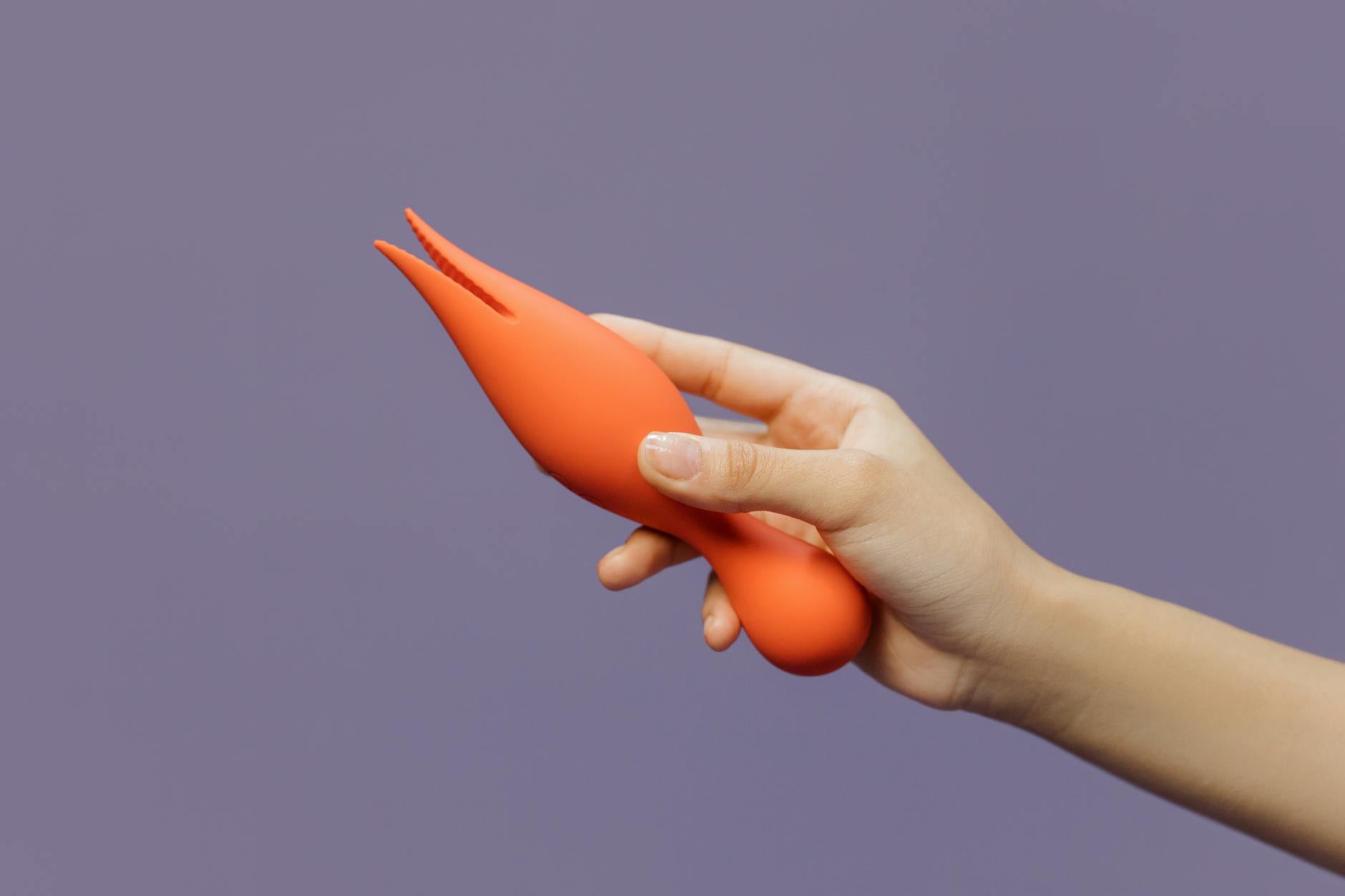
A clitoral vibrator like the Lem isn't a Band-Aid. It's a conversation starter disguised as a toy.
When you introduce external clitoral stimulation into partnered sex, you're not adding complexity. You're adding honesty. You're saying: "My pleasure matters enough to prioritize in real time, not leave it to chance." That's not selfish. That's the bare minimum.
Specifically, here's what shifts:
You stop waiting for your partner to figure out what doesn't have an obvious solution. The Lem provides direct suction stimulation to the clitoris. You control the intensity, the pattern, the rhythm. Your partner doesn't have to guess or feel responsible for your orgasm. They're freed from that pressure. You're freed from waiting.
The sensations are completely different from penetration alone. Because they are. Your brain gets the stimulation it actually needs. Your nervous system relaxes into arousal instead of trying to will itself to orgasm. That changes everything about how the sex feels.
Your partner gets to stay present instead of becoming a machine. When they're not laser-focused on "how do I make this happen," they can actually enjoy the intimacy.
How to introduce it without it feeling like criticism
The framing matters. A lot.
Don't present it as "I can't come from what we're doing." Present it as "I want to explore what feels good for me, and I want you involved." That's a fundamentally different conversation. One is deficit-focused. The other is pleasure-focused.
Talk about it outside the bedroom first. Not during foreplay, not mid-sex. Over coffee or before bed. Say something like: "I've been thinking about how to make sex feel better for both of us. I'd like to try using a vibrator sometimes. Would you be interested in that?" Keep it simple. Keep it collaborative.
When you actually use it, here's the rhythm that works:
Start with foreplay as usual. When you're aroused and approaching the point where you'd normally move toward penetration, introduce the vibrator. Let your partner see it, touch it, understand what it does. Some partners will want to hold it. Some will want to keep their hands free. Both are fine.
If penetration is still happening, the vibrator goes to your clitoris while your partner enters you. That dual stimulation is where a lot of people experience their first real orgasm in partnered sex. It's not because something magical happened. It's because both pathways to pleasure are finally being activated at once.
If you prefer external stimulation only, that's valid too. The vibrator can be the main event. Your partner can focus on kissing, touching, being present in other ways.
The patterns that actually work
Here's what I've seen transform couples from "sex is a routine we do" to "sex is something we both want":
Pattern 1: Every other time. You use the vibrator on alternate encounters with your partner. This isn't about "you don't deserve it every time." It's about varying sensation. Sometimes you want the intensity of additional stimulation. Sometimes you want to feel more of your partner directly. Both are good.
Pattern 2: The escalation model. You start without the vibrator. When you're close to orgasm but not quite there, your partner adds it in. This teaches your body to recognize the edge of climax and sends a clear signal: "Now we're prioritizing your finish." Over time, you might find you need it less because your body knows what arousal is supposed to feel like.
Pattern 3: Partnership toy. The vibrator isn't just for you. Your partner uses it on you as part of foreplay. Some partners love this because it shifts the dynamic from "I have to make you come" to "I get to explore what brings you pleasure." That reframe is huge.
Pattern 4: The priority switch. Sometimes sex is about your partner's pleasure. Sometimes it's about yours. Make that explicit. If tonight is your night, the vibrator comes out. If next time is about them, you skip it. This removes the guilt and shame that often comes from asking for what you need.
Handling the emotional stuff that comes up
Using a vibrator in partnered sex can trigger feelings you weren't expecting. Shame, weirdness, guilt about "needing" something. Your partner might feel briefly threatened, like the toy is replacing them. That's normal. It also passes quickly once you both realize what's actually happening: you're becoming a couple where both people's pleasure matters.
If shame comes up for you, remind yourself: clitoral stimulation doesn't mean anything is wrong with you or your partner. It means you have a nervous system that responds to specific input. That's biology, not failure.
If your partner feels threatened, name it directly. "I'm not looking for a replacement. I want us to figure out how we both finish. That means you, plus this." Most partners relax once they understand that receiving pleasure without guilt is actually the goal for both of you.
When to use internal stimulation, when to use external
A lemon clitoral vibrator works differently than a penetrative vibrator. The suction mechanism on the Lem targets the clitoral glans and the external tissue around it. That's ideal for partnered sex where penetration is already happening, because it doesn't compete with sensation. You get clitoral focus without duplicating what your partner's already doing.
Start with the lowest setting during partnered sex. The dynamic changes when there's another body in the bed. What felt amazing solo might feel intense with added sensation from penetration. Work your way up to intensity levels 3 or 4. Most people in partnered sex don't need the full power.
Timing matters too. Use it when you're already quite aroused, not at the very beginning of foreplay. Your body needs that warm-up to respond fully. About 5-10 minutes into active arousal is usually the sweet spot. If you bring it in too early, you might numb yourself or feel like you're chasing sensation instead of enjoying it.
The conversation that happens after
This is where a lot of couples miss an opportunity. After sex, when you've both finished and you're winding down, actually talk about what worked. Not in a clinical way. Just: "That felt really good." Or: "I liked when you held it." Or: "Can we try something different next time?"
These micro-conversations train your nervous system to associate your own pleasure with partnership instead of shame. Over time, that changes how you relate to your own body and your partner's body. Sex becomes less transactional and more genuinely intimate.
When both partners orgasm, the neurochemistry is different. Oxytocin, the bonding hormone, spikes for both of you. You feel more connected. You want to do it again. That's not coincidence. That's your nervous system rewarding you both for actual mutual pleasure.
So if you've been faking it, or settling, or wondering if this is just how long-term sex works: it's not. You deserve to finish. Your partner deserves to know that both of you matter. A clitoral vibrator isn't a luxury. It's a tool for getting the baseline of sexual satisfaction you should have had all along.
People Also Ask
Will using a vibrator make my partner feel bad about their performance?
Only if you frame it that way. The reframe that actually works: "I want both of us to feel incredible. This helps me get there." Most partners feel relieved when they realize they're not responsible for single-handedly producing your orgasm. It's less pressure on them, more pleasure for you. That's a win.
Can I use a lemon vibrator during penetration without it being weird?
Completely normal. The clitoris and vagina are separate pleasure zones. Stimulating both at once is how a lot of vulva-owners actually experience reliable orgasms during partnered sex. It's not weird. It's practical. And yes, partners can hold it, you can hold it, or you can hold each other while it's there.
What if my partner wants to use it on me but I feel self-conscious?
Start in lower light. Start with clothes on or partial clothing. Let them know exactly where you do and don't want to be touched. Self-consciousness usually fades in about three minutes once pleasure kicks in, because your brain stops running commentary and just feels sensation. It's worth pushing through that initial discomfort.
How do I know if I'm using the right vibrator for partnered sex?
You want something with multiple intensity levels so you can adjust for combined stimulation. You want something quiet enough that you're not self-conscious about sound. You want something waterproof and easy to clean because it needs to be hygienic when multiple bodies are involved. The Lem hits all those marks. If you're exploring other options, those are your criteria.
Does using a vibrator during partnered sex mean I can't orgasm without one?
No. If anything, it's the opposite. Once your body learns what a real orgasm actually feels like, it's easier to access that pathway other ways. You might find you come faster, easier, more reliably. You might find you need the vibrator less because you finally understand what you're working toward. Knowledge is power here.
What if we try this and it kills the mood?
It won't if you frame it right and you're already aroused when you introduce it. The main mood-killer is hesitation or apology. If you act like you're asking permission to enjoy yourself, that becomes awkward. If you act like this is just part of what good sex looks like for you both, your partner will follow that lead. Confidence is the mood-preserver here.
The actual goal
I work with couples where one person finishes 90 percent of the time and the other finishes 10 percent of the time. That's not a sex problem. That's a partnership problem wearing a sex costume. Because eventually, the person who isn't finishing stops initiating. Stops wanting. Starts resenting the person who is finishing without having to ask for anything special.
Then resentment leaks into other parts of the relationship. Suddenly you're arguing about chores or money when you're actually arguing about the fact that your pleasure was never prioritized.
A lemon vibrator fixes the immediate mechanical problem. But the bigger shift is this: you're declaring that your body, your pleasure, your orgasm matters. As much as your partner's does. Not more. Not less. Equal.
That declaration changes everything. Because once you believe it about sex, it gets harder to ignore it everywhere else. You start speaking up about what you want. You stop performing. You start being real.
That's the actual goal. The vibrator is just the tool that makes it possible to get there.