
Let's talk about the elephant in the bedroom
You've got a lemon vibrator. You're with someone new. And now you're wondering: do I mention it? Do I just pull it out one night? Do I act like it doesn't exist and pretend my pleasure works exactly the way they think it does?
Here's the thing. Bringing a sexual toy into a fresh relationship isn't actually weird. What makes it weird is treating it like it's weird. That discomfort gets transmitted faster than you'd think, and suddenly what should be a normal part of your sexuality becomes this loaded, awkward thing.
Why this moment matters more than you think
Early in a relationship, you're establishing a sexual baseline. What you do, what you don't do, what you're comfortable talking about. If you hide your pleasure tools now, you're not just hiding a vibrator. You're encoding a message that pleasure is something to keep private, something potentially shameful, something that needs defending.
I've worked with dozens of couples where one partner introduced a toy years into the relationship and got met with "why didn't you tell me you needed this?" The resentment wasn't really about the toy. It was about the secrecy itself.
Your new partner doesn't need to know everything about your sexuality on date two. But they do need to know that you have one, that you own your pleasure, and that you're not apologizing for it.
The conversation before clothes come off
Timing here is crucial. Don't introduce the idea during sex or foreplay. That's reactive, pressured, and it puts your partner in a position where they have to respond on the spot with no prep time.
Instead, pick a moment when you're both relaxed and clothed. This can happen over dinner, on a walk, or just lying around on a lazy afternoon. The casualness of the setting matters more than the setting itself.
Here's a version of how this might sound:
"So I want to be honest about something because I think good sex starts with not pretending. I use a vibrator as part of my solo practice, and I really like it. When we're ready to bring that into what we do together, I'd want to. Not because anything's missing with you, but because I know what actually works for my body, and I think that's good information."
That's it. You're not asking permission. You're not making it about them. You're stating a fact about your sexuality the same way you might mention that you like your coffee black or that you need eight hours of sleep to function.
What to expect, and what to do about it
Some people will shrug and move on. Some will have questions. Some will feel a small spike of insecurity, which is normal and doesn't mean they're bad at sex.
If they seem hesitant, you can offer context: "I'm not comparing you to anything. My pleasure is just complicated, and sometimes my body needs specific stimulation. Using a lemon vibrator actually helps me relax into what we're doing together."
Don't over-explain. Don't convince. If they need more time to feel okay with it, that's information too, and it's worth understanding why before you move forward.
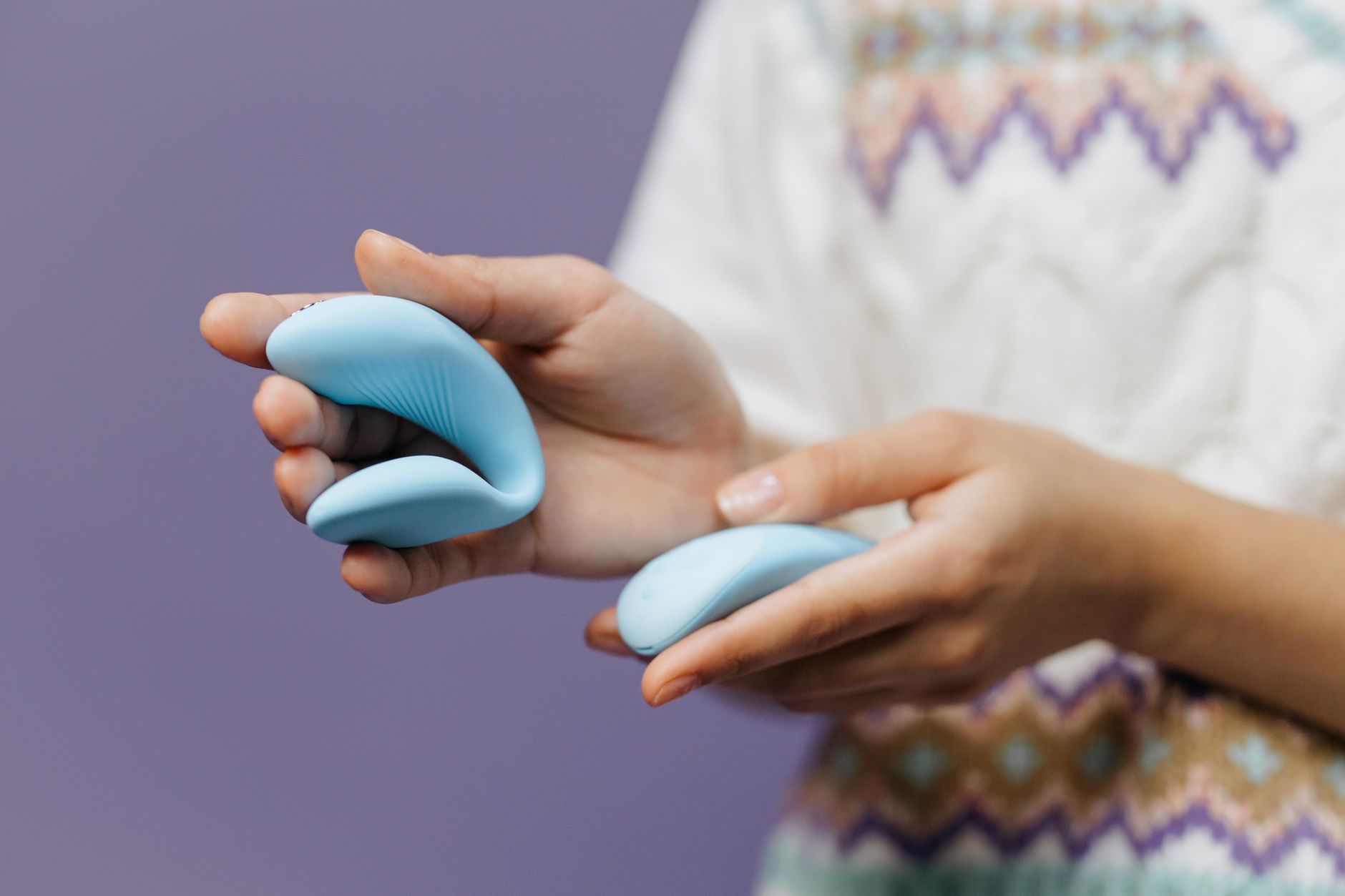
Photo by cottonbro studio on Pexels
The first time you use it together
Don't make it A Thing. No choreography, no performance, no "okay now watch while I use my lemon clitoral vibrator." Just let it happen as part of the natural flow of what you're already doing.
Maybe you're being touched and it feels good but not quite right, so you reach over and turn on the Lem. Maybe you ask them to keep doing what they're doing while you add the vibrator. Maybe you use it solo while they watch, which is actually hot for a lot of people once the initial awkwardness dissolves.
The goal is for it to feel integrated, not introduced. Part of your pleasure ecosystem, not an interruption.
One note: some partners will want to use it on you. Some will feel threatened by it. Some will be fascinated and want to understand how it works. All of those responses are normal. If they want to hold it or operate it, let them. It's actually a good way to demystify the whole thing and turn it into something collaborative rather than something separate.
If they seem uncomfortable after the fact
Don't ignore it or pretend it went better than it did. A day or two later, check in: "I noticed you seemed uncertain last night. Talk to me about that."
Listen without defending. "I feel insecure because I thought I was enough" is worth hearing, even though it's not actually about the toy. From there, you can have a real conversation about what you both need, what you're both nervous about, and what pleasure actually means in a partnership.
Sometimes the discomfort is about masculinity, sometimes it's about performance pressure, sometimes it's about feeling like they can't satisfy you. None of those things are solved by putting the vibrator away. They're solved by talking honestly about what's actually going on.
Choosing the right toy for shared pleasure
If you're introducing a lemon vibrator to partnered sex, the Lem works particularly well because it's designed for external stimulation and doesn't require positioning that makes partner contact awkward.
The size is manageable, the suction pattern feels distinctly different from manual touch (so it's clearly a tool, not a replacement), and it's genuinely quiet enough that neither of you will feel like you're in a buzzing machine. When it's not causing noise anxiety, the whole experience is already more relaxed.
The long game
Once you've integrated a lemon vibrator into your shared experience, the conversation gets easier. Not because the newness wears off, but because you've established that pleasure in your relationship includes talking about what works, trying new things, and prioritizing both people's bodies.
That foundation actually matters way more than the toy itself. Partners who can talk about vibrators can talk about boundaries, desires, frequency, fantasies, and everything else that keeps sexuality alive over time.
The vibrator isn't the goal. The goal is a partnership where your pleasure isn't hidden, negotiated in secret, or treated like an inconvenient truth. The lemon vibrator is just the vehicle.
What if it stays awkward?
If after multiple conversations and experiences it still feels weird and uncomfortable, that's worth examining. Not to shame anyone, but because mismatched comfort around pleasure is something that compounds over time. A partner who can't eventually normalize the fact that you have a body with specific needs might struggle with other parts of intimacy down the line.
You don't need someone who's thrilled about vibrators. You need someone who's willing to accept that your pleasure is non-negotiable and that you know your own body. The rest is just logistics.
FAQ
Should I tell a new partner about my vibrator before we have sex?
Yes, in the conversation phase but not necessarily on the first date. Once things feel physical or directional, a relaxed heads-up is better than a surprise mid-encounter. It sets the tone that you're someone who talks about sex, which most partners actually find reassuring.
What if my partner is offended that I have a vibrator?
That's a conversation worth having before you move forward. Offense usually masks something else like insecurity or outdated ideas about sexuality. Understanding what's actually bothering them matters more than the vibrator itself. If they can't work through it, that's information about compatibility.
Can my partner use my lemon clitoral vibrator on me?
Absolutely, if you're comfortable with it. Many people find it hot to have a partner explore their pleasure with a tool. You can guide them on patterns and intensity. It's actually a good way to make it feel collaborative rather than separate.
How do I bring it up if we've already had sex without mentioning it?
Just address it directly: "I want to be more honest about my sexuality with you. I use a vibrator as part of how I experience pleasure, and I want to integrate that into what we do together when you're ready." It might feel late, but it's never too late for honesty.
What if I'm embarrassed about using a sex toy with a new partner?
That embarrassment is worth unpacking, ideally before things get physical. Owning your sexuality and your pleasure tools is actually deeply attractive to most partners. The discomfort you feel now will likely dissolve once you've been honest about it and nothing bad happened.
Does using a lemon vibrator mean something's wrong with our sexual connection?
No. It means you know what works for your body and you're not willing to fake orgasms or settle for disconnected sex. That's a feature, not a bug. Partners who understand that actual pleasure requires specific conditions are usually better at everything else too.