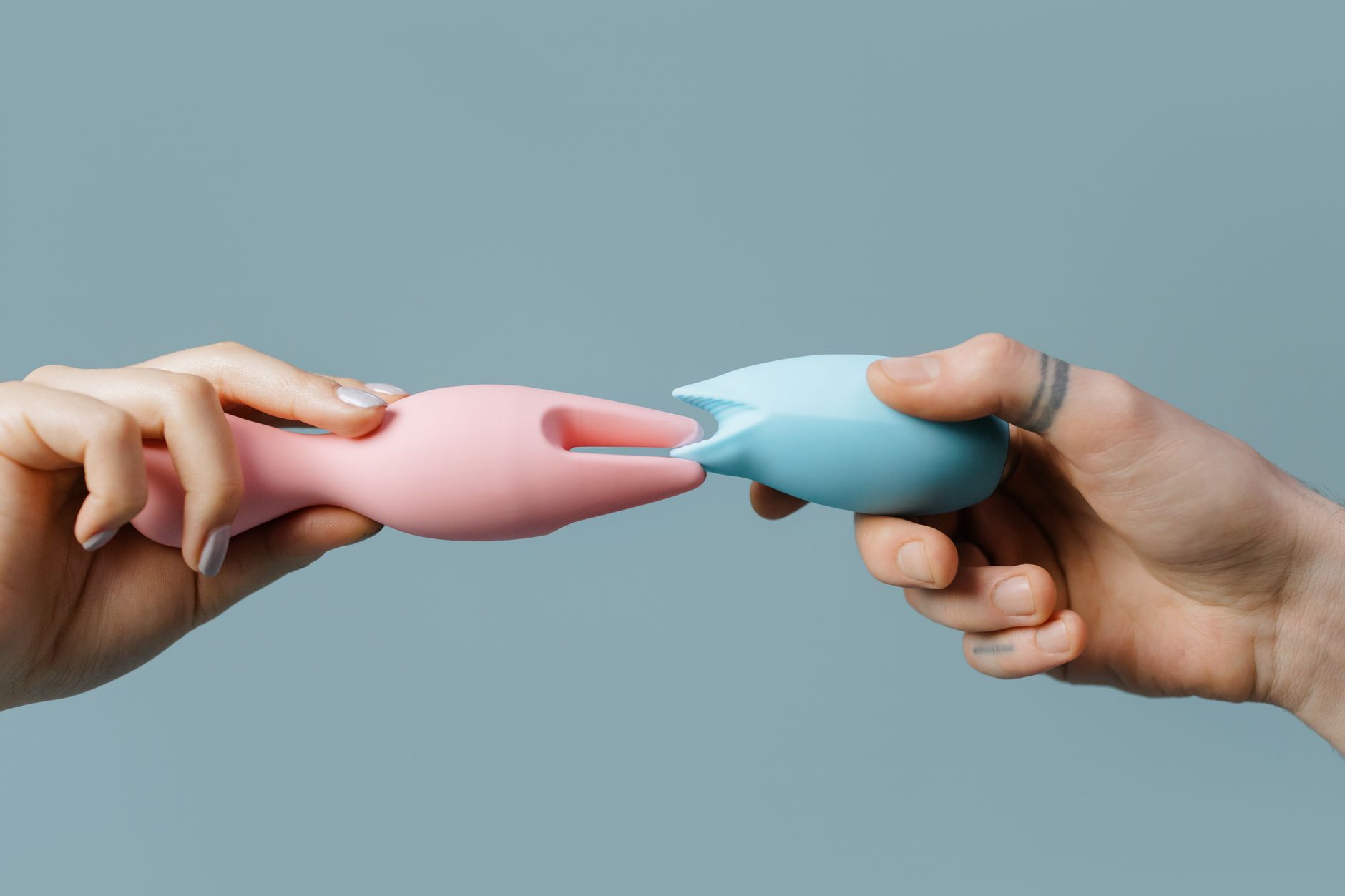
How to Use a Lemon Vibrator When Pleasure Feels Flat After Long-Term Relationship Patterns
Here's what nobody tells you about long-term couples
After 5, 10, or 20 years together, pleasure can flatten. Not disappear. Flatten. The difference matters because a lot of people think flatness means they've lost attraction or the relationship is broken. Usually it means something smaller and more fixable: your nervous system has gotten bored.
When the same touch happens the same way every time, your brain stops paying attention to it. That's not a relationship problem. That's neurology. The body adapts to predictable stimulus by tuning it out. A lemon vibrator, specifically a suction-based clitoral vibrator, interrupts that adaptation precisely because it introduces novelty without requiring either partner to overhaul the entire dynamic.
I've worked with dozens of couples where everything else is solid. They like each other. They're attracted. The sex just feels like checking a box. A lemon clitoral vibrator often fixes this not by being "better" but by being different enough to wake the nervous system back up.
Why your body stops responding to familiar touch
Here's the mechanism. When your partner touches you the same way, at the same pace, in the same sequence, your nervous system habituates. Habituation is a survival feature. Your brain learned long ago that if a stimulus isn't new or dangerous, it doesn't need to pay full attention. Your system conserves energy by treating familiar input as background noise.
Over years together, even good touch can become background noise. The person you love touches you the way they always do, and your body just... goes through the motion. You might still orgasm. The sensations might still feel okay. But the electricity is gone. The feeling that your body is being discovered rather than serviced is gone.
What makes a lemon vibrator different is the mechanism itself. Suction-based stimulation works through air-pulse technology, which creates a pressure wave rather than direct vibration. Your nerve endings haven't adapted to that specific pattern because you've never experienced it in quite that way before. Novelty reactivates your nervous system's attention. Suddenly sensation feels vivid again.
The specific role of the lemon sucker in long-term couples
The Lem from Hallonancys is designed as a clitoral sucker, meaning it uses gentle suction waves rather than traditional buzzing vibration. For couples who've been together for years, this particular design solves a specific problem: it feels distinctly different from any touch a partner could deliver, which means it doesn't trigger habituation in the same way.
When you introduce a lemon clitoral vibrator into an established routine, you're not replacing your partner's touch. You're expanding the texture palette. The nervous system recognizes "partner touch plus this new sensation" as genuinely novel. Suddenly the entire experience feels less automatic.
Many partners worry this will be a sign of something missing in their relationship. It isn't. It's a sign that your system wants variety. Using a lemon vibrator together becomes permission to acknowledge that. You're not rebuilding anything broken. You're just adding a layer.
Starting the conversation without it feeling like criticism
Here's where a lot of couples get stuck. One person wants to introduce a toy and worries the other person will feel inadequate. That fear is understandable and usually unfounded, but only if you frame it right.
The move is to lead with sensation, not deficiency. Not "I need something more" but "I want to experience this specific thing with you." A lemon vibrator isn't a criticism of what your partner does. It's a yes to something new that the two of you can explore together.
Some couples use it solo first, just to understand the sensation and find a pattern that works. Others integrate it into partner sex right away. Neither is wrong. The only move that typically backfires is springing a toy on someone without any conversation, which reads as ambush rather than collaboration.
The best opener I've seen: "I read about this thing. I want to try it with you. Are you into that?" Honest, direct, collaborative. Most partners will be more curious than threatened.
How to actually use the lemon clitoral vibrator when pleasure has felt stale
Start with the lower patterns. If you've been with your partner for years, your usual rhythm is probably pretty automatic. The Lem works best when you're intentional, so resist the urge to jump to intensity 7. Start with patterns 1 or 2 and actually notice the sensation. This sounds obvious, but most people use toys the way they've always masturbated, which defeats the purpose.
The point is to reactivate attention. That requires slowness. Spend 5 minutes on pattern 1 alone before you even consider turning it up. Your nervous system needs time to recognize this as genuinely different.
If you're using it with a partner, the dynamic shifts slightly. Some couples use it as foreplay before partnered sex. Others use it during partnered sex, either taking turns with attention or using it while your partner does something else. There's no rule. The novelty is what matters.
One thing I recommend: have your partner involved in the choice of pattern. Not necessarily using it themselves, but choosing it together. That keeps it collaborative rather than isolating.
What actually shifts when the nervous system wakes up
When sensation becomes vivid again, a few things change in the relationship bed. First, anticipation returns. If you know you're going to use a lemon vibrator, you think about it beforehand in a way you haven't in years. That mental loop is half the fix.
Second, communication increases. "Do you want pattern 3 or 4 tonight?" becomes a real question rather than a routine you both know by heart. That small difference reintroduces choice into something that had become automatic.
Third, your partner often gets more engaged too. Watching someone's face when they're experiencing genuine sensation, rather than performing pleasure, is different. A lot of partners find that watching is actually more interesting than the routines they've fallen into.
Finally, the permission you've given each other to want novelty extends beyond the toy. The conversation usually becomes a real one. "What else have we stopped noticing about each other?" That kind of question. A lemon vibrator can be the doorway to deeper talks about desire, attention, and what you both actually want.
When to integrate a toy versus when to focus on the relationship first
Here's something important: a lemon clitoral vibrator can reactivate sensation in a solid relationship. It cannot fix a relationship where the real problem is disconnection, resentment, or absent communication.
If you and your partner have stopped talking about intimacy and you're hoping a toy will just handle the flatness, the toy will probably disappoint you. If the real issue is that you don't feel seen or your partner isn't prioritizing your pleasure, the toy might create a workaround but it won't address the actual rupture.
Before you introduce a lemon vibrator, check in with yourself: Is the flatness situational (we've fallen into a rut but we're otherwise solid) or symptomatic (we're not really connecting and pleasure is just one sign of that)? If it's the latter, that conversation needs to happen first. A toy can enhance an already functional dynamic. It can't create one where the foundation is cracked.
FAQ: Pleasure Rebuilding With Toys in Established Relationships
What if my partner feels threatened by a toy?
That concern is actually really common and usually solvable. The threat usually stems from a story they've told themselves (I'm not enough, this means my partner is leaving my mind, etc.). Naming that directly helps. "I want to add this, not replace you. I want to feel that kind of sensation with you." Most partners relax once they understand it's collaborative.
Can a lemon vibrator really make sex feel new again?
It can absolutely shift the dynamic, especially if the flatness is neurological habituation rather than emotional disconnection. Novelty reactivates attention. That said, the vibrator is the tool, not the whole solution. The fact that you're both willing to try something new together? That's actually the thing that rebuilds spark.
Should I use it solo first or introduce it together?
Both work. Solo lets you understand it without pressure. Together keeps the collaborative energy. I usually suggest solo exploration first just so you know what you enjoy, then bring your favorite patterns into partnered time. That gives you language: "I like this one because of how it feels in this spot."
How often should we use it?
There's no magic frequency. Some couples integrate it into their regular rotation once a week. Others use it occasionally when they want to shake things up. The point is that it's available when you both want novelty. The excitement often comes from choice, not routine.
What if we try it and it doesn't help?
Then the flatness probably isn't habituation. It might be emotional distance, which needs a different conversation (possibly with a relationship counselor). Or it might just mean that particular sensations don't resonate with you, which is fine. You've learned something useful: it's not about the toy, it's about what the flatness actually is.
Can we use a lemon vibrator if we have different sensitivity levels?
Yes. In fact, that's one of the benefits. If one partner has always needed more intense sensation and the other prefers gentler touch, a lemon suction vibrator can offer a middle ground that feels like novelty to both. The specific patterns mean you can customize the experience to what each person actually wants.
The Real Shift
Long-term relationships don't die from age. They die from attention deficit. Using a lemon vibrator isn't about replacing your partner or proving something is broken. It's about collectively deciding to stay curious about pleasure, about each other, about what wanting actually feels like when routine loosens its grip.
The vibrator is a tool. The real work is the conversation, the choice to try something different, the willingness to be surprised by someone you've known for years.
If that sounds like something you and your partner are ready for, Hallonancys offers a lemon clitoral vibrator designed exactly for this kind of exploration. But more than that, it offers permission. Permission to want more, permission to change, permission to notice each other again.
Ready to talk this through? Contact our team and we can help you figure out what might work best for your dynamic.
Sources
Basson, R. (2001). Human sex response cycles. Journal of Sex & Marital Therapy, 27(1), 33-43.
Zipfel, S., et al. (2016). Relationship predictors of sexual satisfaction in long-term couples. The Journal of Sexual Medicine, 13(3), 444-451.
Meston, C. M., & Frohlich, P. F. (2000). The neurobiology of sexual function. Archives of General Psychiatry, 57(11), 1012-1030.