
How to Use a Lemon Vibrator When Pleasure Feels Sharper After Hormonal Shifts
Something shifted. The stimulation that felt perfect three months ago now feels like too much. Or maybe it's the opposite. What used to be a gentle buzz suddenly feels electric. Hormonal changes do this.
They don't just affect lubrication or how fast you get aroused. They change how your nerve endings perceive sensation. A shift in estrogen, progesterone, testosterone, or even thyroid function can make pleasure feel sharper, more acute, sometimes overwhelming. It's not you losing sensitivity. It's your body recalibrating.
If you're using a lemon clitoral vibrator and everything suddenly feels different, this is what's actually happening and what to do about it.
Why hormonal shifts change how vibration feels
Your clitoris has more than 8,000 nerve endings. Every single one of them responds to hormonal fluctuation. When estrogen drops, tissue thins slightly, which means nerve endings sit closer to the surface. That proximity doesn't always feel bad. Sometimes it means sensation becomes sharper, more direct, more intense.
Testosterone changes affect this too. A drop in testosterone can make sensation feel duller; a rise can make it feel keener. The same goes for thyroid hormone. Add in cortisol shifts from stress or life transitions, and you've got a system that's constantly recalibrating what "normal" stimulation feels like.
This is why a pattern setting on your lemon vibrator that felt perfect last summer might feel wrong in winter. It's not the toy. It's your body's baseline.
The intensity recalibration protocol
When pleasure suddenly feels sharper, your first instinct might be to turn down the intensity. That's often right, but not always. Sometimes the sharpness isn't "too much." Sometimes it's just different. Here's how to figure out which one it is.
Start lower than you think you need to. If you normally start at pattern 3 on your Lem, begin at pattern 1 or 2. Spend 3-5 minutes there. Your body is telling you something has changed. Listen first, adjust second.
Focus on the sensation, not the outcome. Don't go in expecting the same orgasm arc you had before. You're mapping what sharpness actually feels like now. Is it pleasant-sharp or painful-sharp? Is it concentrated or radiating? Is it building or staying flat? The difference between these matters for everything that comes next.
Move slowly through the intensity ladder. Once you're comfortable at your starting pattern, move up one setting. Spend another few minutes. Your nervous system needs time to process that the sensation isn't a threat.
When sharpness is actually too much
There's a difference between "different" and "hurting." If you're feeling a pinching sensation, burning, or sharp pain that doesn't fade after 30 seconds, stop. That's not intensity. That's your body saying no.
If this is happening, check three things:
Your positioning. When sensation feels sharper, the angle matters more. You might need to adjust how the Lem sits against your vulva. Try shifting it slightly up, down, or to one side. Sometimes 5mm of repositioning changes everything.
Your lubrication. Sharpness often gets worse if your tissue is dry. Even if you think you're lubricated enough, add more water-based lube. It shouldn't feel slick like oil. It should feel like your body's own wetness, just more of it. That buffering layer makes sharp sensation feel smoother.
Your warm-up time. If you've moved straight from your day into pleasure without transition time, your body hasn't had time to shift into arousal. Spend 10-15 minutes building arousal before you pick up the Lem. Read something, watch something, touch yourself manually. Get your blood flowing first.
Leveraging the sharpness when it feels good
Not all increased sharpness is a problem. Many people find that when sensation feels more acute, their orgasms become more intense and arrive faster. That's not something to fix. That's something to work with.
If the sharpness feels good but different, you're dealing with an opportunity, not an obstacle. Your heightened sensitivity might be telling you that you're ready for deeper exploration. Maybe you've never tried combining patterns before. Maybe you've never used a Lem in longer sessions. Maybe you're ready to experiment with touch that you weren't ready for before.
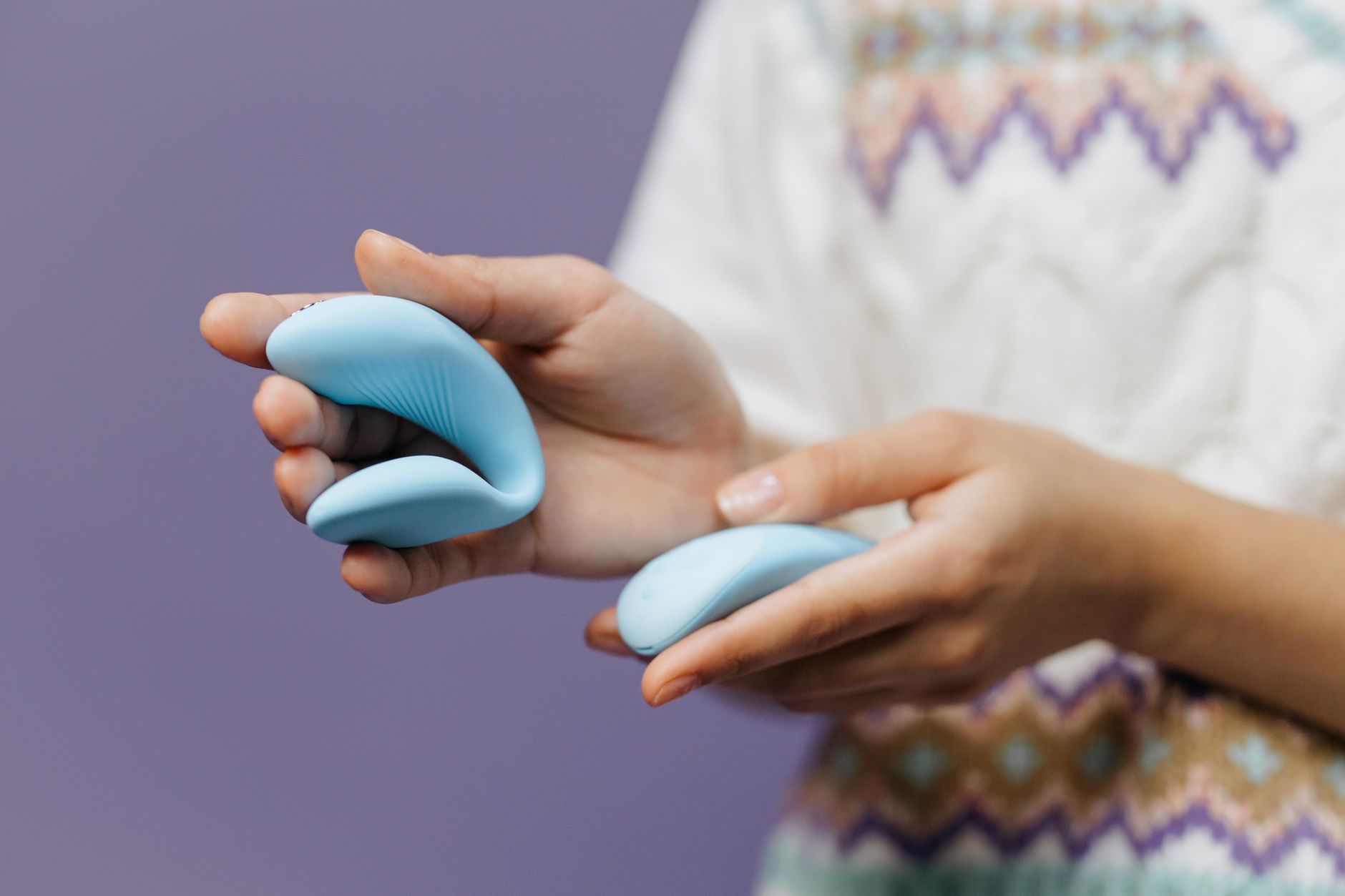
Photo by cottonbro studio on Pexels
Hormonal shifts that increase sensation acuity often come with increased arousal too. You might find that you're getting turned on faster or more intensely. Use that. Let your pleasure build differently. Don't default back to your old rhythm just because it's familiar.
The timing of hormone cycles and sensation intensity
If you menstruate, you already know that sensation shifts across your cycle. The follicular phase (before ovulation) often brings sharper sensation. The luteal phase (after ovulation) often brings more diffuse, deeper sensation. If your hormonal shift is cycle-related, knowing where you are in your cycle helps you predict what you'll feel.
If you're on hormonal birth control, your sensation baseline stays more consistent month to month, but it's different from your natural cycle. Many people find that lemon clitoral vibrators feel different on hormonal birth control than they do off it. Different isn't bad. It just requires recalibration.
If you're in perimenopause, menopause, or post-menopause, hormonal sensation shifts are part of the transition. This isn't temporary. It's your new normal. Which means your Lem relationship needs to shift too.
Relearning your Lem in a changing body
One of the hardest parts of a hormonal shift is feeling like you have to start over with something that used to feel automatic. You don't have to start over. You have to learn your body again.
Spend a week using your lemon vibrator in low-pressure exploration mode. Not performance mode. Not trying-to-come mode. Curiosity mode. What patterns feel interesting now? What intensity does it take to feel something satisfying? Does your favorite position still work or has that changed too? Does your sensitivity shift if you've eaten a certain way, slept a certain amount, or had more caffeine?
Your body keeps shifting. Hormones are fluid. What feels sharper this month might feel normal in two months. What feels overwhelming right now might feel just right in a season.
If you're newly experiencing sharpness across multiple arousal sessions and your body feels good overall, this is often a sign that your nervous system is actually waking up. Some people experience this after a major life transition, after finally addressing something that was causing stress, or after hormonal changes that took months to stabilize. That sharpness can be the beginning of deeper pleasure, not the warning sign of a problem.
When to reach out for support
If the sharpness remains painful, or if it's paired with other changes like pain during everyday activities, painful periods, or changes to your pelvic floor function, check in with a gynecologist or pelvic floor specialist. Sometimes what feels like heightened sensation is actually nerve sensitivity related to pelvic floor tension. That's treatable.
If the sharpness is making you avoid pleasure altogether, or if it's creating relationship friction because your needs have changed and your partner's haven't, that's worth talking through with a therapist or relationship coach. Pleasure isn't a fixed thing. It changes. And that can be disorienting for partners who aren't expecting it.
The invitation here is to stay curious instead of frustrated. Your body is talking. Your lemon vibrator is a tool to listen more deeply. When pleasure feels sharper, it's usually not a malfunction. It's information.
People also ask
How do I know if my lemon vibrator intensity is too high after hormonal changes?
Too-high intensity usually shows up as pinching, burning, or sharp pain that doesn't fade. It might also feel like your clitoris is getting overstimulated or numb after just a few minutes. The key test: if you stop for 30 seconds and the discomfort doesn't ease, the intensity is too high. Drop down one setting and reassess. Comfort should feel like a building sensation, not a warning signal.
Can birth control change how a lemon clitoral vibrator feels?
Absolutely. Hormonal birth control stabilizes your hormone levels, which changes baseline sensation. Many people notice their clitoris feels less sensitive on hormonal birth control, which means lighter patterns suddenly feel thin and they need to move toward higher intensities. If you've recently started or stopped birth control, give yourself 2-3 weeks to recalibrate before assuming your Lem has stopped working.
What's the difference between sharper sensation and nerve damage?
Sharp sensation from hormonal shifts feels localized, improves with positioning or lubrication, and is consistent across multiple sessions. Nerve damage usually comes with numbness, shooting pains, or sensations that don't improve with any adjustment. If you're unsure, a pelvic floor specialist can assess this in 10 minutes. Don't guess. Get checked.
Should I use a different pattern if my pleasure feels sharper?
Maybe. Some patterns on your lemon vibrator concentrate stimulation into a smaller area, which can feel sharper. Others spread it wider, which can feel gentler. If pattern 3 feels too intense, try pattern 2 or a different pulse rhythm. Your Lem has multiple patterns for exactly this reason. Test them all before deciding a pattern doesn't work anymore.
Does increased sharpness mean my hormones are changing permanently?
Not necessarily. Sharpness can come from cycle timing, stress levels, sleep, hydration, or temporary hormonal fluctuation. It can also come from things like thyroid changes or medication shifts. If the sharpness is consistent over weeks, it's worth talking to your doctor. But a week or two of different sensation is usually just your body doing its thing.
How long does it take to adjust to sharper pleasure sensations?
Most people recalibrate within 3-7 days of consistent exploration. Your nervous system adapts quickly. If it's been longer than two weeks and everything still feels wrong, that's when you might need outside support, whether that's a gynecologist for medical changes or a relationship coach if partnered pleasure is affected.
Moving forward
Your lemon vibrator isn't the problem. Your pleasure isn't the problem. Hormonal shifts are just part of having a body that changes. When sensation feels sharper, slower down, pay attention, and give yourself permission to relearn what feels good. That's not backtracking. That's deepening your relationship with your own pleasure.
If you want to talk through what's happening with your body or your pleasure, we're here. Get in touch and let's figure this out together.