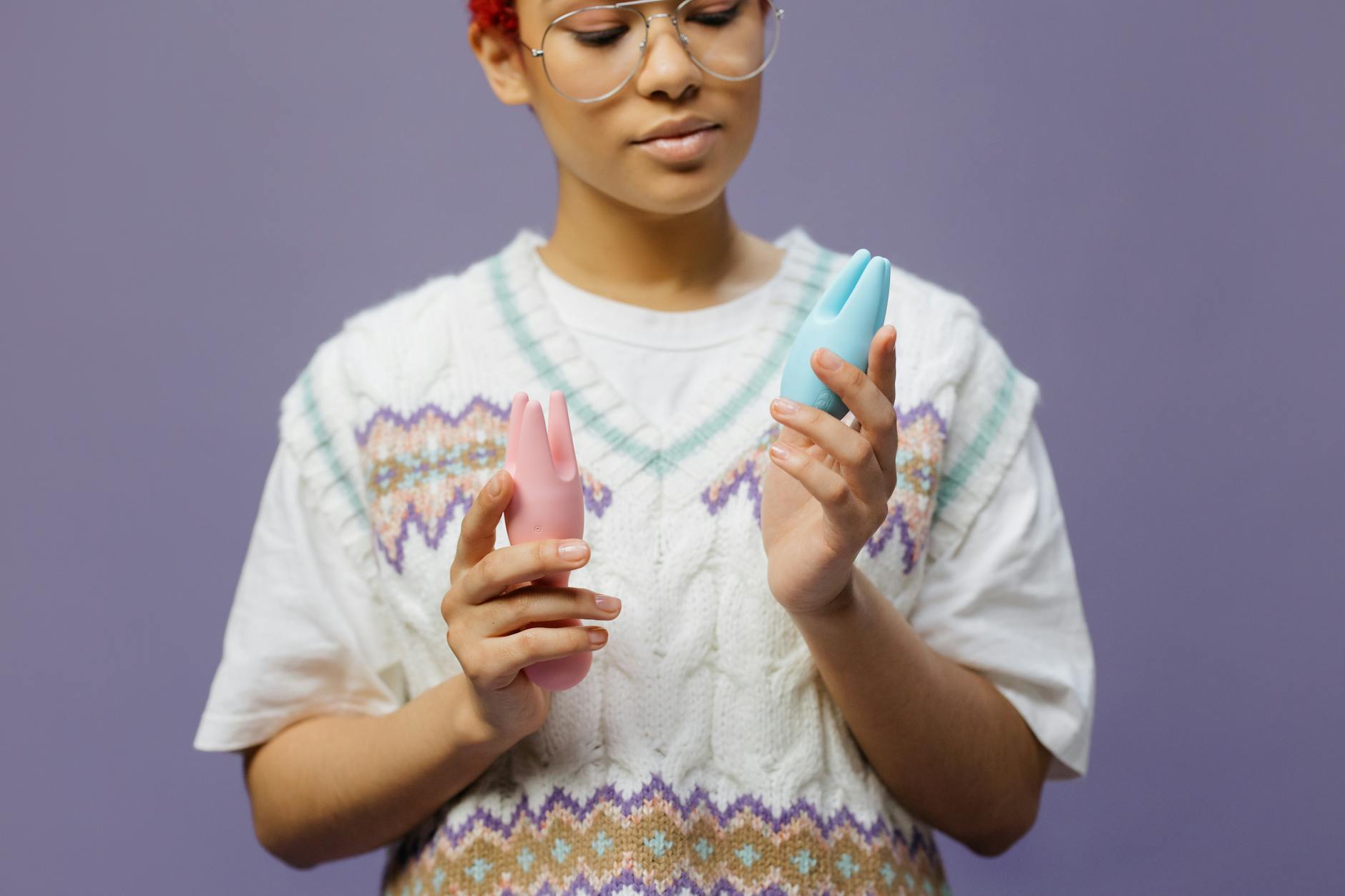
The perimenopause plot twist nobody warns you about
Let's be real: perimenopause is not menopause. But it's also not your normal cycle anymore. For years (sometimes a decade), your body sits in this weird in-between where estrogen and progesterone bounce around like they're drunk, and sensation gets genuinely weird. You're not losing your pleasure capacity. What's happening is that the pathway to pleasure is being renovated.
Here's what I see in my practice: women hit their mid-40s, and suddenly everything from arousal speed to orgasm intensity feels different. Some report needing twice as long to get going. Others say their clitoris feels almost numb until they hit just the right touch. A few describe heightened sensitivity that borders on uncomfortable. All of these are perimenopause. All of them are navigable.
What's actually happening in your body right now
During perimenopause, estrogen doesn't drop steadily like it does in menopause. It spikes and crashes unpredictably. This matters for pleasure because estrogen regulates blood flow to the genitals, tissue thickness, and how quickly your nervous system fires in response to stimulation.
When estrogen is high (day 7-14 of a cycle that's increasingly unreliable), arousal might feel easier and faster. Touch might feel sharper. Orgasms might arrive more quickly or feel more intense.
When estrogen dips or crashes (which becomes more frequent in perimenopause), you might notice your clitoris feels less responsive. Direct touch might feel too intense or weirdly numb. Arousal takes longer to build. Your pelvic floor tightens involuntarily, which can trap sensation rather than amplify it.
Here's the crucial part: this is not permanent. This is not a symptom of loss. This is your nervous system recalibrating in real time.
Why sensation feels different (and where a lemon vibrator enters)
Direct manual stimulation becomes harder during some phases of perimenopause because thinner tissue is more prone to irritation, and irregular blood flow means less engorgement. This is where a lemon sucker or air-suction toy like a lemon clitoral vibrator completely changes the game.
Air-suction technology doesn't rely on friction the way a traditional vibrator does. It creates a seal around the clitoris and uses gentle pulses of suction, which stimulates deeper nerve endings without the surface-level friction that can feel too intense or irritating when tissue is thinner or sensitivity is high.
For perimenopause specifically, this means:
You can stimulate without worrying about tissue damage. The suction pattern draws sensation inward rather than rubbing the surface, which works beautifully when your clitoris is less engorged than usual.
You get customizable intensity. Most lemon clitoral vibrators start at pattern 1 or 2. You can begin at a barely-noticeable intensity and work up, which matches the rhythm of perimenopause arousal perfectly. Some days you need intensity 1. Some weeks you need intensity 8. The toy grows with your hormonal shifts.
The stimulation mimics what your body is actually asking for. When estrogen is low and tissue is thinner, your clitoris often responds better to deep, consistent pressure than to rapid vibration. Suction offers that without the aggression of a traditional vibrator.
Building your perimenopause pleasure protocol
Here's what I recommend to clients navigating this transition.
Track your arousal, not your cycle. In perimenopause, your period might come early, late, or might skip entirely. Tracking the day of your cycle is useless. Instead, pay attention to when arousal feels easier. Spend two to four weeks noticing: when does your body warm up faster? When does it feel numb or irritable? When do orgasms feel most satisfying? This information is more valuable than any calendar.
Use the lemon vibrator differently on high-estrogen days. When arousal feels sharp and your clitoris is more engorged, you might start at a higher intensity pattern (5-7) right away. You might use suction alone without adding your hands.
Use the lemon vibrator differently on low-estrogen days. Begin at patterns 1-2 and spend 10-15 minutes building intensity slowly. Add lubricant even if you never needed it before (water-based only, please). Use your hands or a partner's hands alongside the toy to create a fuller sensory picture. Sometimes a combination of suction plus external touch lands differently than suction alone.
Extend warm-up time. Perimenopause arousal doesn't rush. If you used to need 5 minutes to feel ready, budget 15-20 now. This is not a loss. This is a gift in disguise because extended warm-up often means deeper, more full-body pleasure.
Breathe differently. Perimenopause can tighten the pelvic floor involuntarily. Before using your lemon clitoral vibrator, spend 2-3 minutes with your eyes closed, breathing slowly and intentionally relaxing your pelvic floor. In, hold for 4. Out for 6. This single shift can transform sensation from numb to sharp.
What perimenopause doesn't change
Your capacity for pleasure remains intact. Your clitoris has 8,000 nerve endings. Hormones don't erase that. They modify the blood flow and tissue thickness that surrounds those nerves, but the nerves themselves are still there, still responsive.
Your ability to orgasm is still available. I know it doesn't always feel that way. But the neural pathways for orgasm exist independent of estrogen. Some of my clients report their most satisfying orgasms of their lives come during perimenopause once they stop fighting the changes and start working with them.
Your desire doesn't have to disappear. Many women conflate "arousal takes longer" with "I don't want this anymore." These are different things. It's possible to have desire and need more time to feel physically ready. A lemon vibrator compressed that gap. You still want connection. Your body just needs a different pathway to get there.
Partnered play during perimenopause
If you have a partner, this is a conversation, not a surprise. Tell them what you're noticing. "My body feels different right now. I need more time to warm up" is not a personal rejection. It's information.
Many partners actually find this transition easier to navigate with a lemon clitoral vibrator because the toy does the repetitive work while hands and bodies can focus on connection, kissing, and presence.
One surprising thing I've seen: partners often feel less pressure once a toy enters the picture because the focus shifts from "am I doing this right" to "we're exploring something together." That collaborative energy often deepens intimacy.
When to involve your doctor
If sensation changes come with pain, bleeding that's heavy or unpredictable, or mood shifts that feel unmanageable, bring this to your GP. Perimenopause is normal. Suffering through it isn't. Hormone therapy, progesterone cream, or other interventions might be worth exploring.
If your lemon vibrator consistently feels uncomfortable even at the lowest intensity, you might have localized atrophy or another condition worth ruling out. A gynaecologist can assess this quickly.
The bigger picture
Your body isn't breaking down during perimenopause. It's reorganizing. A lemon clitoral vibrator isn't a workaround for a problem. It's a tool that meets your body where it actually is right now, not where it was at 25.
Give yourself permission to explore what works during this phase. The lemon vibrator you use at 43 might be different from the one you use at 50, which might be different from the one you rely on at 60. That's not instability. That's attunement.
If you're feeling overwhelmed by these shifts, remember: this is temporary. Whether you transition fully into menopause or your cycle eventually stabilizes, perimenopause has an end. Until then, tools like a lemon sucker and information about what's actually happening in your body can turn this transition from disorienting into genuinely enjoyable.
Your pleasure matters during perimenopause just as much as it did before. It's just asking for something different from you right now.