Let's talk about postpartum sensation
After childbirth, your body doesn't just heal from the physical event. Your nervous system recalibrates. Tissues that stretched and tore become hypersensitive as they repair. Hormones that supported pregnancy plummet. The pelvic floor, whether you delivered vaginally or via cesarean, needs time to rebuild its capacity and its signal system.
Most postpartum sexual advice says "wait six weeks" and then assumes you're ready. That's medical clearance, not pleasure readiness. Those are different things.
If you're interested in rebuilding intimacy and your body feels like someone turned the sensitivity dial to eleven, this guide walks you through how to use a lemon vibrator safely when sensation feels overwhelming.
Why postpartum sensation changes feel so strange
Three things happen simultaneously after you give birth.
First, your estrogen and progesterone crater. These hormones regulated nerve sensitivity, lubrication, and tissue elasticity for nine months. When they vanish, your nervous system feels that loss like static on a radio. Touch that felt pleasant before now registers as intense or uncomfortable.
Second, your pelvic floor is injured. Even uncomplicated vaginal births create micro-tears. Cesarean delivery, while avoiding that specific trauma, cuts through muscle and fascia that then knit back together in ways that feel unfamiliar. This healing tissue is more reactive to stimulation. Your brain is essentially relearning how to interpret signals from a region that feels novel and fragile.
Third, you're likely exhausted and touched out. Your body has been a feeding station, a comfort object, a physical resource for another human. When sensation feels too much, sometimes the "too much" isn't purely physical. It's emotional too.
The lemon vibrator advantage for postpartum bodies
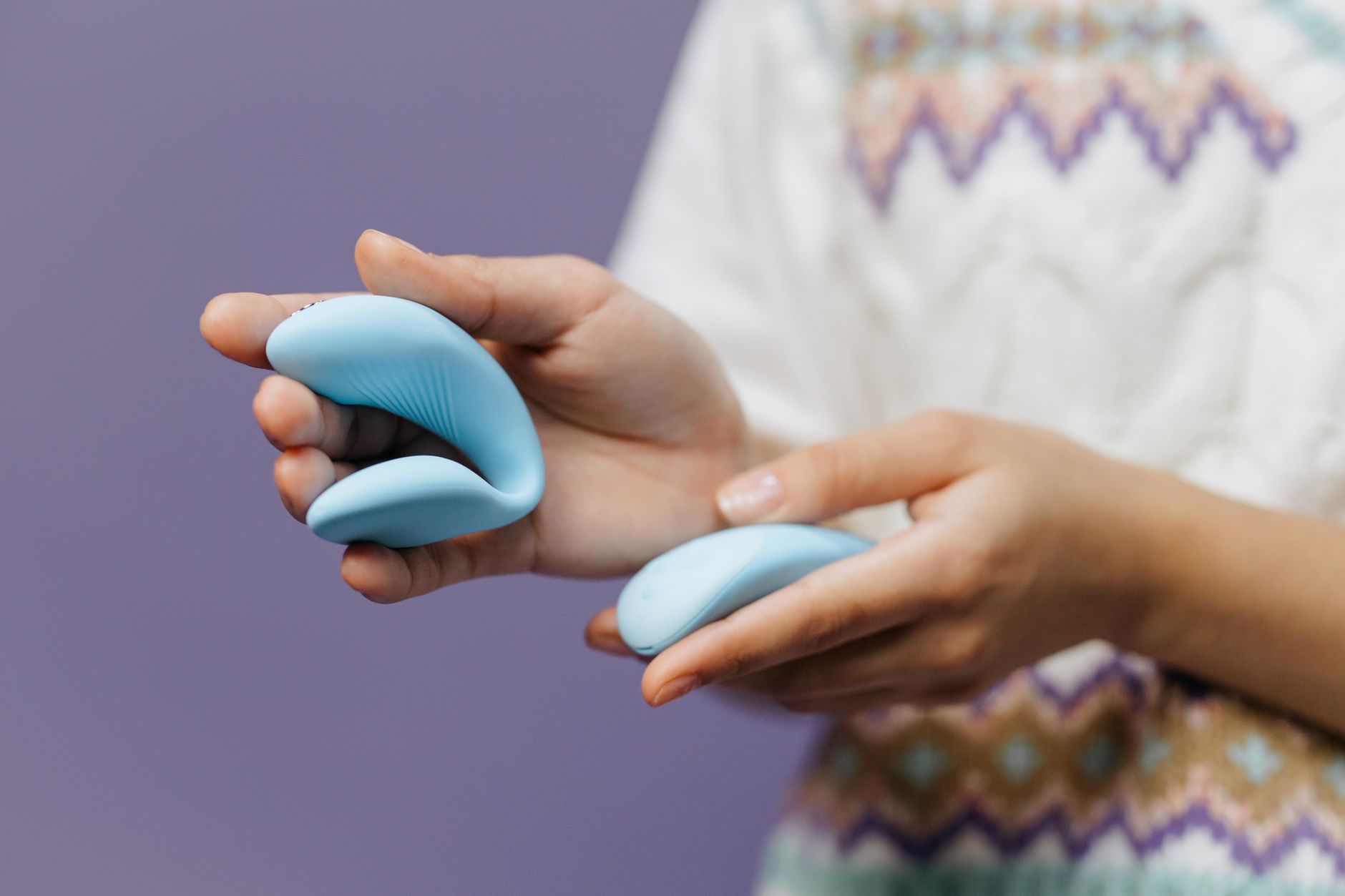
Here's why a lemon clitoral vibrator is genuinely useful for this phase. Unlike traditional vibrators that rely on direct mechanical buzz, lemon vibrators use gentle suction and pulsing patterns. That matters for postpartum sensation because suction doesn't aggravate freshly healing tissue the way direct vibration can.
The lem vibrator, for instance, lets you start at pattern 1. Most users never go above pattern 3 or 4. When sensation feels heightened, that low-ceiling approach is exactly what you need. You're not fighting against a toy designed to deliver maximum intensity.
The other benefit is psychological. Air-suction devices feel gentler, more forgiving. If your postpartum nervous system is already in high alert, using a tool that feels delicate (rather than mechanical) can actually lower your anxiety response, which helps everything feel less overwhelming.
Starting before you start: the pacing framework
Wait for medical clearance first. That's non negotiable. Most providers clear you around six weeks, but twelve weeks is more realistic for pleasure readiness. If you had complications, ask your doctor.
Once cleared, wait another two weeks minimum before introducing any toy. Use this time to rebuild sensation awareness alone. Touch your partner's hand. Notice temperatures. Lie in the sun. Let your nervous system recalibrate without a tool amplifying input.
When you're ready to introduce a lemon vibrator, use this timeline:
Week 1: External touch only. Hold the lemon vibrator (off) against external areas only. Notice how the silicone feels. Warm it in your hands first. This sounds basic, but your nervous system needs to recognize the object as safe before sensation enters the picture.
Week 2: Pattern 1, one minute sessions. Turn it on the lowest setting for 30-60 seconds. External areas only. Stop before you feel saturation. You want to finish wanting more, not finish overwhelmed.
Week 3-4: Pattern 1, building duration. Extend to 2-3 minute sessions if that feels good. Stay on pattern 1. Consistency matters more than intensity.
Week 5+: Explore patterns 2 and 3 if you want to. Many people find they never need to go higher. That's fine.
The practical setup that actually helps
Postpartum bodies have different needs. Set yourself up for success.
Use water based lubricant, even though things might feel slick. Postpartum tissue is still rebuilding its natural lubrication capacity. A little external lube reduces friction without adding pressure to healing areas. It also signals to your nervous system that you're not forcing anything.
Choose a time when you've recently slept and eaten. Pleasure requires resources. Your postpartum body is running on a deficit. 2 a.m., hungry, with a baby monitor on? Not the time. Saturday afternoon after your partner watches the baby for two hours and you've had actual food? Yes.
Start clothed or partially clothed. Nakedness can feel vulnerable when your body feels strange to you. Wear what makes you feel like yourself, not what you think you "should" wear for this.
Mute notifications. Tell your partner the door is closed for a reason. You cannot rebuild sensation when you're half listening for a baby cry.
When to pause, when to push slightly forward
You're looking for a feeling of ease with gentle interest. Not overwhelm. Not numbness. Somewhere in the middle.
Pause if you feel burning, sharp pain, or that raw nerve sensation that makes you want to jump out of your skin. That's not sensation ramping up. That's your body saying no. Go back a step in the timeline.
Pause if you're numb or completely disinterested. That often means you need more sleep or you're still touching out. Pleasure requires you to be present. If you're not there, don't force it.
Gently push forward if you feel curious. If pattern 1 feels boring and you're not overwhelmed, try pattern 2 for 30 seconds to see what it's like. Curiosity is the sign you're ready to explore.
The partner conversation that changes everything
If you have a partner, they need to understand this isn't about them or your desire for them. It's about nervous system recalibration.
Many partners interpret postpartum low libido as rejection. It's actually just your body asking for time and gentleness. Separate that conversation from your solo pleasure exploration. "I'm rebuilding my sense of my own body" is different from "I don't want you." Both are true. They're not the same sentence.
Let your partner know the timeline. If you're planning to explore sensation on a certain day, tell them. Remove the surprise. Remove the pressure to perform or hide it. When partners feel included in the healing process rather than excluded from it, the whole thing moves faster.
When sensation settles and you're ready for more
Some people find that by three months postpartum, sensation feels almost normal. Others take six months or longer. There's no standard timeline. Your body wrote its own schedule before you were born and it's writing it now.
Once sensation feels settled and you're genuinely curious about partnered pleasure, the tools you've learned with your lemon vibrator transfer directly. You know your patterns. You know your pace. You know what overwhelms you. That's the information your partner needs, and you already have it.
Rebuild your pleasure deliberately. Your postpartum body is not broken. It's just on a different schedule.
People also ask
How long after childbirth can I use a lemon vibrator?
Wait for medical clearance (typically six weeks) and then wait another two to four weeks before introducing a vibrator. Your pelvic floor needs time to stop actively healing before adding stimulation. Start with external touch only, then follow the timeline in the body of this guide. If something hurts or feels wrong, stop and check with your doctor. Trust that timeline.
Can I use a lemon clitoral vibrator if I'm breastfeeding?
Yes. There's nothing in pleasure or vibration that affects milk supply or milk composition. What does matter is that breastfeeding can increase touch sensitivity and sometimes cause touch aversion, especially if a baby is nursing frequently. If you feel touched out, solo exploration with a lemon vibrator can actually help because it's on your terms and your timeline. You control the intensity and duration.
Will a lemon vibrator hurt my pelvic floor recovery?
Not if you use it gently and follow the pacing timeline. The suction method that lemon vibrators use is gentler than mechanical vibration. Keep sessions short in the first weeks. Avoid inserting anything into the vagina until you've got clearance from your care provider. If you had a cesarean, you can explore external sensation sooner, but give yourself grace anyway. Your nervous system is still healing even if tissue didn't tear.
What if sensation still feels too intense after several weeks?
Check three things: sleep, stress, and medication. Postpartum hormones make everything feel more intense when you're exhausted. Stress keeps your nervous system in high alert. Some medications (especially certain antidepressants) can heighten sensitivity. If you've ruled those out, talk to your provider about postpartum anxiety or a possible nerve sensitivity issue. Sometimes pelvic floor physical therapy is genuinely helpful here.
Can I use patterns 2 and 3 if pattern 1 feels boring?
Yes, but do it deliberately. Try pattern 2 for 30 seconds in the middle of a session to see how it feels. If it feels interesting and not overwhelming, you can expand from there. The patterns on a lemon vibrator are designed to be incrementally more intense, so your body already knows what comes next. There's no shame in staying on pattern 1 for months if that's what feels right. Some people genuinely prefer gentler stimulation postpartum.
Is it normal to feel nothing at all for months after childbirth?
Yes. Postpartum depression, postpartum anxiety, hormone crashes, sleep deprivation, and touch aversion all kill libido and sensation. This isn't permanent and it isn't your fault. If numbness persists beyond four to six months, talk to your provider. It might be worth exploring whether you need support with postpartum mental health. Pleasure is tied to your nervous system, and your nervous system needs care during this phase.
You're not broken. You're rebuilding.
Your postpartum body is not a version of your pre-pregnancy body that needs to snap back. It's a different body with different needs and different timelines. When sensation feels overwhelming, that's not a sign you should wait longer or try harder. It's information. Use it. Slow down. Breathe. Let pleasure rebuild at the pace your nervous system can handle.
If you need more support as you navigate postpartum pleasure and intimacy, reach out to a therapist or counselor who specializes in this phase. You deserve care and information designed for where you actually are, not where you think you should be.