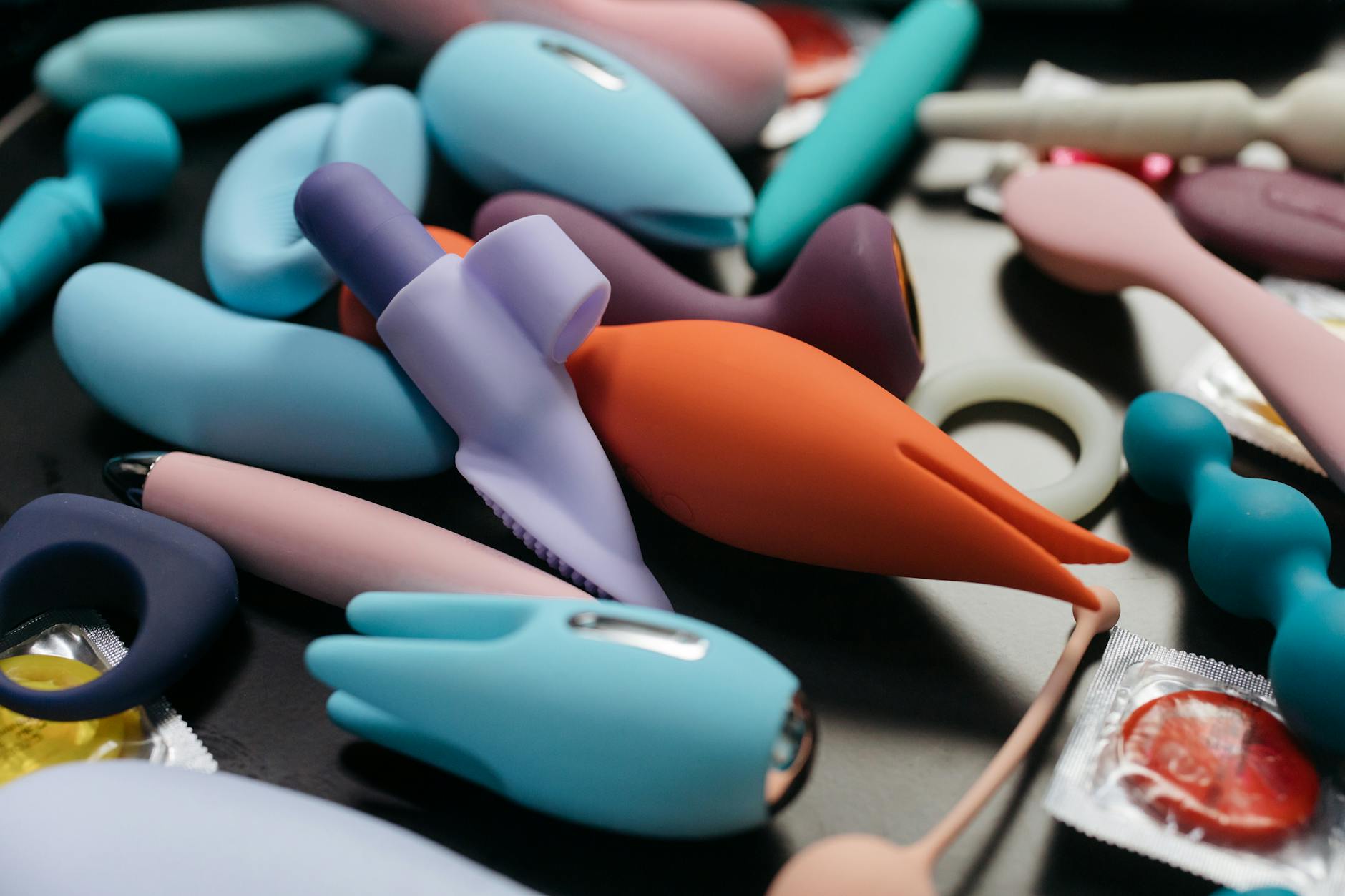
When your body works but your mind is somewhere else
Here's the thing nobody talks about: you can have all the physical stimulation in the world and still feel absolutely nothing. Your clitoris responds. Your body lubricates. You might even orgasm on paper. But the experience feels hollow, distant, like you're watching yourself from three feet away instead of being inside your own sensation.
That's pleasure disconnection, and it's wildly more common than you'd think. It's not broken. It's not broken at all. But it does require a different approach than what usually works.
Why the mind-body gap happens
Disconnection has three main lanes. Sometimes they overlap.
Cognitive load. Your brain is running a background task it won't admit to. Bills, a conversation you replayed at 3 a.m., the way your partner looked at you, whether you're doing this right. The prefrontal cortex (the part that thinks) is so loud it drowns out the sensory cortex (the part that feels). Stimulation arrives, but the message doesn't land.
Anxiety about pleasure itself. This one's sneaky. You want to feel good, which creates pressure to feel good, which makes you monitor whether you're feeling good, which kills the feeling. A lemon clitoral vibrator can't fix that spiral by itself, but it can interrupt it. More on this in a bit.
Protective numbness. Sometimes the nervous system decides feeling is too risky. This happens after trauma, chronic stress, relationship rupture, or prolonged depression. Your body literally down-regulates sensation to keep you safe. That's a feature, not a bug. And it can shift, but usually not through force.
The fourth lane, which doesn't fit neatly but matters: dissociation that's become habitual. You learned early to leave your body when things felt unsafe. Now it's the default, even when things are safe. The pattern ran so long it became invisible.
How a lemon vibrator works differently for reconnection
A lemon clitoral vibrator like the Lem operates through suction and gentle pulsing rather than direct vibration. That matters for reconnection work because it demands less tolerance but delivers more sensation.
Here's the neurology piece: when stimulation is too intense or too familiar, your nervous system habituates. It stops noticing. The same pattern gets filed into the background, like traffic noise. A lemon vibrator's pattern breaks that filing system. The suction is novel to most people, which forces attention. You can't zone out through a sensation you've never felt before.
That novelty is intentional. You're not trying to achieve an orgasm. You're trying to feel. The orgasm, if it comes, is a side effect.
The reset protocol: reconnecting sensation to awareness
Four things change when you're using a lemon vibrator for disconnection instead of just for pleasure.
1. Start with pattern 1 or 2. Stay there.
When you're chasing sensation, speed feels good. When you're rebuilding the sensation-feeling link, intensity scrambles the signal. A gentler pattern forces you to pay attention. You have to listen harder to feel it.
Set a timer for 5 minutes at pattern 1. No escalating. If your brain says "this isn't working," that's the disconnection talking. Stay put.
2. Name the sensation as it happens.
This isn't poetic. It's literal.
"Pressure on my clitoris. Warmth spreading. A pulse. Slight ache below. Release."
Say it or think it. The narration connects language to sensation, which pulls the prefrontal cortex into the experience instead of leaving it to worry. You're describing, not evaluating. The difference matters enormously.
3. Interrupt the body monitoring.
You're probably checking: "Am I close? Should I be feeling more? Why is this taking long?" That's the anxiety spiral. When you notice it, don't fight it. Name it instead.
"My brain is checking on me right now. That's fine. I'm safe. I can go back to the lemon vibrator."
Then move your attention back to the actual sensation. Not "back to pleasure." Back to sensation. The distinction is fine but real.
4. Expect the feeling to return in layers.
Reconnection isn't a light switch. First you'll feel pressure. Then temperature. Then texture. Maybe the next week, anticipation. Orgasm, if it comes, is often the last layer to return. People often think they've failed because they haven't come, when actually they've just reconnected to sensation for the first time in years.
You're building literacy, not chasing a destination.
When reconnection takes longer
If you've been disconnected for years, or after trauma, or alongside depression, reconnection can take weeks or months, even with a lemon clitoral vibrator. That's not a failure. That's just how the nervous system works. It protected you by disconnecting. It will reconnect when it believes you're safe enough to feel again.
Three things speed that timeline without forcing it.
Regulation work outside of solo time. Breathwork, cold water, movement, time in your body. A simple practice: tense and release each body part deliberately. Your nervous system learns safety in small, repeated doses.
Grounding before you start. Three things you can see, three you can hear, three you can touch. It sounds silly. It works. Your brain confirms: "I'm here, I'm safe, I'm in this room." Then you can feel again.
A partner who understands the project. If you share a bed with someone, let them know what you're working on. Not as pressure, but as context. "My body is learning to feel again. That's what I'm focusing on, not orgasm." Most partners soften immediately when they understand they're not the problem.
The emotional piece (because it matters as much as the physical)
Honestly, disconnection usually isn't just about sensation. It's about what pleasure means in your relationship, or your history, or your sense of self.
Some people disconnect because they're angry at a partner and can't acknowledge it, so the body disconnects instead. Some disconnect because they learned that wanting things was dangerous. Some disconnect because the gap between what they want and what they have is too painful to feel.
A lemon vibrator reconnects you to sensation. But if the underlying story is still "my pleasure doesn't matter" or "wanting is risky," the disconnection will return. That's where the slower work lives. Therapy, honest conversation with a partner, reckoning with your own beliefs about what you deserve. That's not sexy, but it's real.
People also ask
Why do I feel numb even though my body is responding to the lemon vibrator?
Your nervous system has likely learned to separate physical response from emotional feeling as a protection mechanism. This is common after stress, anxiety, or when you're monitoring your experience too closely. The lemon vibrator's gentle suction can interrupt the pattern, but reconnection takes patience. Start with shorter sessions focused on pure sensation rather than orgasm, and consider whether anxiety or relationship dynamics are contributing to the numbness. If disconnection is tied to trauma or depression, talking with a therapist alongside the reconnection work makes a significant difference.
How long does it take to feel pleasure again after disconnection?
There's no fixed timeline. Some people report reconnection in days, others over weeks or months. It depends on how long you've been disconnected, whether there's an underlying anxiety or trauma, and how consistently you practice. Think of it like learning a new language. Your nervous system needs repetition and safety signals before it believes it's okay to feel again. Shorter, regular sessions with a lemon clitoral vibrator work better than occasional longer ones.
Can my partner help me reconnect to sensation?
Absolutely, but differently than you might expect. A partner can't force reconnection, but they can create safety. That means slowing down, checking in, and focusing on sensation rather than outcome. Many couples find that starting solo work with a lemon vibrator first, then bringing that practice into partnered time, works better than trying to reconnect during sex.
Is disconnection during sex a sign the relationship is over?
Not necessarily. Disconnection happens for lots of reasons. Sometimes it's relationship-based. Sometimes it's individual: stress, medication, depression, or past trauma. Sometimes it's both. The key question isn't "Is the relationship broken?" but "Is there safety and willingness to slow down and rebuild?" If yes, reconnection work often shifts the whole experience. If no, that's different information.
What if I'm using a lemon vibrator and still feel nothing after weeks?
That's a signal to bring in support. Persistent disconnection despite consistent practice might point to depression, medication effects, a nervous system that needs professional help regulating, or an underlying relationship dynamic that needs to shift. A therapist who understands sexual health can help you figure out which. You're not broken. You just need a different approach than a toy alone can offer.
Can I use a lemon clitoral vibrator while working through trauma?
Yes, but thoughtfully. A sex toy isn't trauma therapy, so don't expect it to be. A lemon vibrator can help you reconnect to your body in controlled, manageable doses, which some people find grounding. But if the disconnection is trauma-related, you'll likely benefit most from working with a therapist alongside any physical reconnection work. The goal is safety first, sensation second.
What comes next
Reconnection is slow. That's not a bug. That's evidence that your nervous system is learning to trust again, incrementally. A lemon vibrator is one tool in that process, useful specifically because it's novel, gentle, and demands attention without demanding intensity.
The real work is patience with yourself. Your body didn't disconnect to punish you. It disconnected to protect you. When you're ready to feel again, it will know.
If you're stuck, or if reconnection work brings up bigger feelings than you expected, reach out. That's what support is for. You don't have to do this alone.