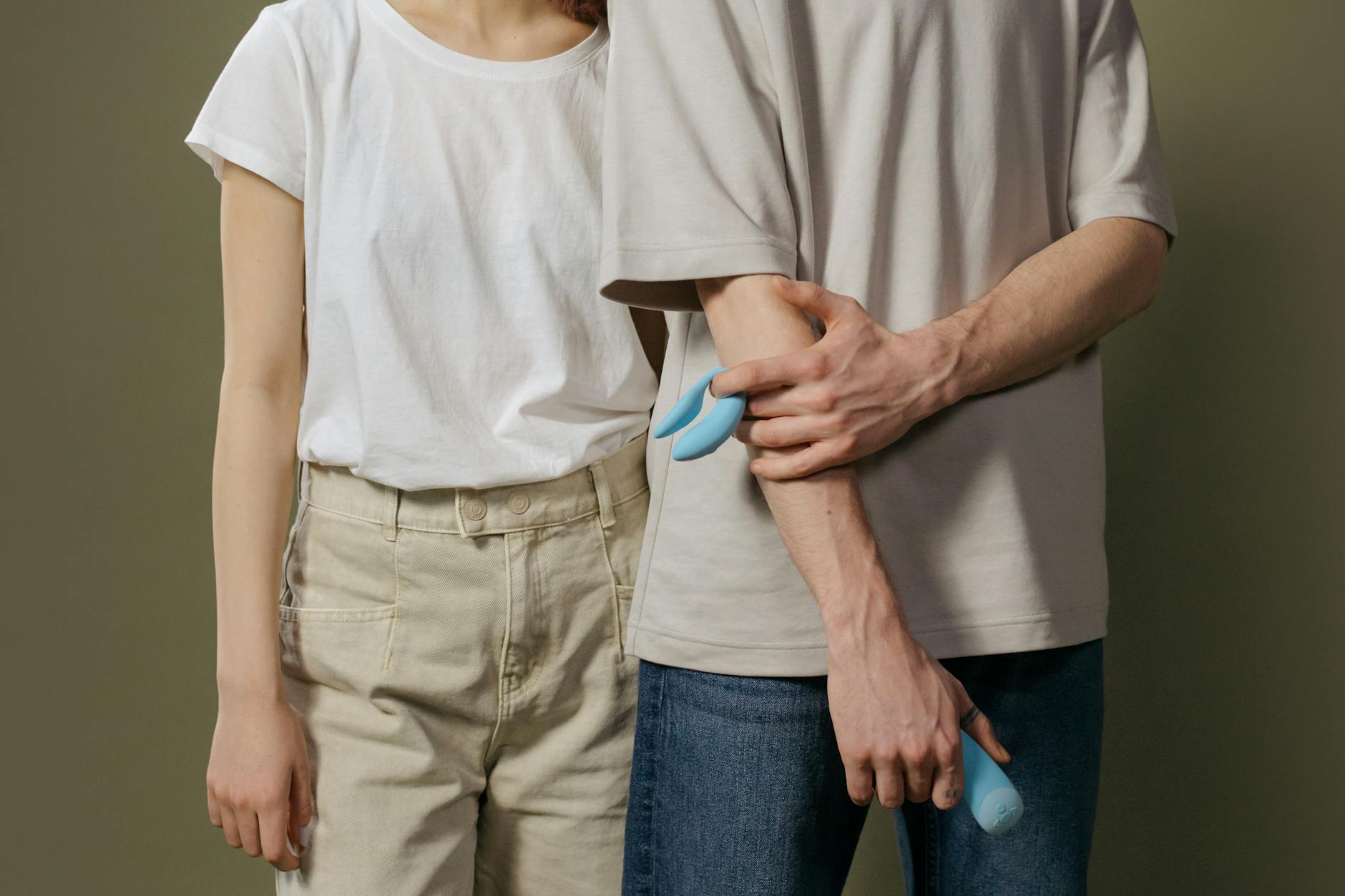
Here's what nobody tells you about coming off the pill
You spend years managing your hormones chemically. Then you stop. And suddenly your body is a stranger again. Your cycle might be wildly irregular. Your skin might act up. Your mood might swing. But here's the part that rarely makes it into the conversation: your pleasure blueprint rewires too. Not in a bad way. Just differently. Understanding that shift is the difference between feeling broken and feeling like yourself again.
What happens hormonally when you quit birth control
Hormonal birth control suppresses your natural estrogen and progesterone cycles. It keeps everything stable and flat. For some people, that's brilliant. For others, it means years of muted sensation, lower desire, and orgasms that feel distant or hard to access. When you stop, your ovaries wake back up. Your hormone levels fluctuate again. And often, the first thing people notice is that pleasure feels different. Sometimes sharper. Sometimes confusing. Sometimes really good.
The lemon clitoral vibrator works particularly well during this transition because suction-based stimulation doesn't depend on your baseline hormone levels the way direct vibration does. It creates its own neural signal, independent of how much estrogen is circulating that day.
The first 30 days: the adjustment window
Your body needs about 3 to 6 months to fully regulate off hormonal birth control. But the pleasure shifts start much sooner. In the first month, many people report:
- Increased desire (sometimes surprising, sometimes uncomfortable)
- Changes in how sensitive the clitoris feels day to day
- Arousal that builds faster and then plateaus differently
- Orgasms that feel new, as if you're rediscovering them
This is normal. You're not broken. You're just relearning what your body can do when it's not being chemically managed.
The lemon vibrator is useful here because you can experiment at your own pace. Unlike a partner, it doesn't require communication or sync. You can use it on different intensity settings, for different lengths of time, to figure out what your recalibrating body actually wants right now.
Why sensation feels off (and how to work with it)
When you're on hormonal birth control, sustained estrogen suppression can numb the clitoris. You might have needed more pressure, longer sessions, or higher speeds to get there. That was your body adapting to less hormonal support.
When you stop, estrogen comes back online. The clitoral tissue thickens. The nerve endings become more responsive. For some people, this means things that felt numb suddenly feel intense. For others, it means the old techniques that worked feel wrong now. You might need to start lighter and build, instead of jumping to high intensity. You might need shorter sessions because sensation peaks faster. This is all real, and it's all okay.
Start with the Lem on pattern 1 or 2. Give yourself 10 to 15 minutes to explore. Your clitoris will tell you what it needs. It might surprise you.
Desire and arousal feel different now
Hormonal birth control flattens testosterone. It blunts the neural cascade that makes you want sex in the first place. Coming off it, your testosterone comes back. For many people, that means desire returns with it. Sometimes aggressively. Sometimes in unfamiliar ways.
There's a specific window in your cycle now that will feel different from before. Your follicular phase, around ovulation, will probably feel most sensual. Your luteal phase might feel more complex. Some people report that their sexual response feels more tied to their menstrual cycle than it ever did before.
A clitoral vibrator gives you agency during all of it. On days when desire is low, you can use it to build arousal gently. On days when desire is high, you can explore it without waiting for a partner or feeling like something's wrong. You're the variable that matters.
The real challenge: psychological resynchronization
Here's the part that's not just physical. If you've been on hormonal birth control since your early twenties, your adult sexuality developed on top of it. You learned your arousal patterns, your orgasm style, your turn-ons, all under the influence of synthetic hormones. Coming off it, you're meeting a sexual self you've never actually known.
That can feel exciting. It can also feel destabilizing. Some people report a grief response, even when they're relieved to be off the pill. You might feel like you need to relearn how to have pleasure, because you kind of do.
Using a lemon vibrator during this transition is less about achieving an orgasm and more about staying curious about what pleasure feels like now. Low pressure. High exploration. Permission to take time.
Practical setup for the transition period
Four things to do right now:
1. Track your cycle, loosely. You don't need an app. Just note when you bleed and roughly when you feel most sensual. After a few months, patterns will emerge. You'll know which days are high-sensitivity days and which are low.
2. Use water-based lubricant, even if you never did before. Your vaginal tissue is recalibrating. It might feel different. Lube isn't a sign something's wrong. It's a tool. A water-based option works with both the lemon vibrator and your shifting body chemistry.
3. Give yourself a full 5 to 10 minutes of non-genital touch before using any toy. Your arousal system is waking up. It needs time. Massage your breasts, your inner thighs, your neck. Feel where sensation lives now that your hormones are back.
4. Use the vibrator solo before using it with a partner. You need baseline data on what feels good to you alone. Then you can communicate that, instead of trying to figure it out in real time with someone else.
When to expect pleasure to stabilize
After about 3 months off hormonal birth control, your cycle will start to regulate. After 6 months, most people report that their pleasure response feels predictable and integrated again. It's not that sensation goes back to where it was before the pill. It's that it settles into a new normal that's actually yours.
Many people report that pleasure after coming off birth control is better than it ever was. More responsive. More nuanced. Less numb. You didn't get better. Your body just got back to baseline.
If desire stays low or sensation stays muted
Most pleasure shifts normalize within 6 months. If yours hasn't, get bloodwork done. Sometimes coming off hormonal birth control unmasks an underlying thyroid issue, low iron, or low vitamin D. All of those affect arousal and sensation. A good doctor can run a panel. If everything comes back normal and desire is still missing, that's worth exploring with a therapist. Sometimes the pill masked something else that needs attention.
The partnership piece
If you have a partner, this is a good time to restart the conversation about pleasure together. Your body has changed. They probably don't need to know every detail. But they do need to know that things might feel different for you, and that's intentional, not a rejection.
You might want to rebuild intimacy after relationship conflict by being clear about what you're exploring and why. Or if everything's solid and you just want to introduce a clitoral vibrator into your shared pleasure, that's a separate conversation altogether.
The key is honesty. Your body is rebalancing. A good partner gets that.
FAQ
How long does it take to feel normal after stopping birth control?
Sexual pleasure usually starts shifting immediately, but stabilizes over 3 to 6 months as your cycle regulates. Some people feel different within weeks. Others take longer. If major changes persist past 6 months, talk to your doctor. Your baseline might have genuinely shifted, or there might be something medical underneath.
Will my orgasms feel the same as before I went on the pill?
Maybe not. If you started hormonal birth control in your late teens or early twenties, your orgasms on the pill aren't your baseline. They're your medicated baseline. Coming off it, you're meeting the real thing for the first time as an adult. Many people find it's better.
Can I use a lemon clitoral vibrator while my cycle is still irregular?
Absolutely. Irregular cycles are normal in the first few months off birth control. The lemon vibrator doesn't care about your cycle. Use it whenever you want, as often as you want. It might help you understand your body's patterns better.
What if my desire comes back stronger than feels manageable?
That's not uncommon. Testosterone was suppressed for years. When it comes back, some people feel like their sexuality is cranked up to 11 overnight. That can feel good or overwhelming, depending on your context. Give it time. And if it genuinely bothers you, talk to your doctor. There are options, though most people adjust within 3 to 6 months.
Should I tell my partner that I'm using a lemon vibrator during this transition?
That's between you and them. If you're in a monogamous relationship and prefer transparency, yes. If you have a boundary around solo pleasure, that stands too. What matters is that you're getting to know your body. The partner piece can follow.
Does coming off birth control improve sexual pleasure for everyone?
Not everyone. Some people felt better on the pill. Some felt worse. Pleasure is individual. What matters is that you notice what actually feels true for your body, not what you think should feel true. A lemon vibrator is just a tool for that noticing.
You're not broken. You're just recalibrating.
Coming off hormonal birth control is a real transition. Your body is resetting decades-old hormonal patterns. That takes time and attention. A clitoral vibrator like the Lem isn't a workaround for that process. It's a way to stay present during it. To notice what's changing. To remind yourself that pleasure is still available to you, just maybe in a different shape than before.
If you want support navigating intimacy shifts or relationship questions as your body rebalances, reach out. That's what we're here for.