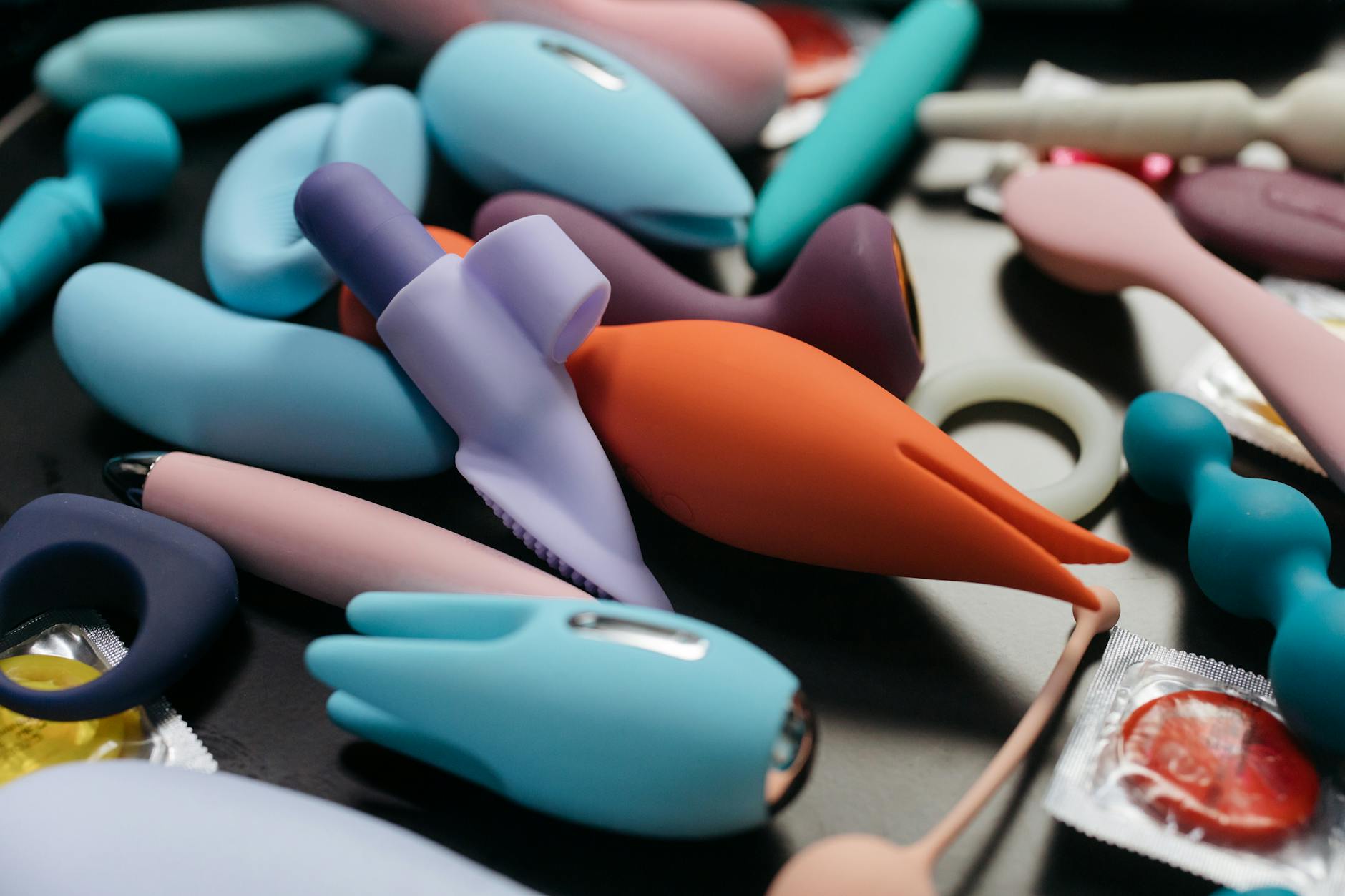
Here's what nobody warns you about perimenopause
You're not in menopause yet, but you're definitely not in your normal cycle anymore. Hot flashes appear without warning. Your period skips a month, then returns heavier than before. And somewhere in the middle of all this biochemical chaos, your arousal pattern shifts. It's not gone. It's just... different. Unpredictable. Which is exactly why understanding how to use a lemon vibrator during this phase matters so much.
Perimenopause typically lasts 4 to 10 years, and it's the most hormonally volatile time of your life outside of adolescence. Estrogen and progesterone aren't declining steadily. They're bouncing around like a broken elevator. Your body doesn't know if it's ramping toward ovulation or shutting down entirely. That chaos affects everything from your mood to your motivation to your capacity for pleasure. The good news: a lemon clitoral vibrator is designed to work regardless of where your hormones are on any given day.
How perimenopause actually changes arousal
During your reproductive years, arousal follows a rough pattern. Estrogen climbs in the follicular phase (day 1 to day 14 of your cycle). You feel more responsive. Orgasms come easier. Then progesterone takes over after ovulation, and you're slightly less inclined, slightly more irritable, but often capable of deeper, more intense sensation.
Perimenopause throws that script into the recycling bin. Estrogen spikes and crashes unpredictably. Sometimes you ovulate, sometimes you don't. Your progesterone levels become inconsistent. The result: your arousal baseline becomes unstable. One week you feel exactly as you did at 28. The next week, stimulation that usually works does almost nothing.
This isn't about loss of capacity. It's about inconsistency. And inconsistency feels worse than genuine decline because you can't predict it or plan for it.
Why lemon vibrators work better during hormonal flux
A suction-based lemon vibrator like the Lem works by creating rhythmic, gentle pressure rather than direct mechanical vibration. That matters during perimenopause because your tissues are more sensitive to friction as estrogen fluctuates. Some days, a traditional vibrator feels too intense. Other days, the same intensity feels exactly right.
Suction adapts more intuitively to those shifts. The gentle pressure-release cycle stimulates the clitoral network without aggressive abrasion. If sensitivity is low, you can increase the pattern intensity. If sensitivity is high (a common perimenopause experience due to inflammatory shifts), the suction approach causes less irritation than buzzing would.
You're also less likely to experience the desensitization that sometimes happens during perimenopause when using traditional vibrators continuously. The clitoral suction technology works with your body's natural response mechanisms instead of against them.
The week-to-week adjustment strategy
Here's what I tell clients navigating this phase: perimenopause requires a flexible approach. Your arousal isn't broken. It's just temperamental. These adjustments help.
During high-estrogen weeks (usually the first two weeks of your cycle, when you're most likely to ovulate), you might find yourself wanting more intensity. The Lem's higher patterns often feel ideal at this phase. Your tissues are more plump, blood flow is robust, and sensation-seeking is normal.
During the low-estrogen, high-progesterone phase (roughly day 14 to day 28), or during any week when estrogen suddenly crashes, start with lower patterns. Patterns 1 through 3 on most Hello Nancy lemon vibrators give you plenty of stimulation without overwhelming tissue that's become temporarily more fragile.
On weeks when your cycle is completely absent (a common perimenopause experience), treat it as a low-estrogen day. You're not broken if you need more warmup time or a longer session to build arousal. Your body simply needs a different approach that week.
Lubrication becomes non-negotiable
Even though we're years away from the profound tissue thinning of post-menopause, perimenopause already starts the process. Estrogen fluctuations mean less consistent natural lubrication. This doesn't mean anything is wrong. It means lubrication becomes a tool, not optional.
Water-based lube is your friend during this phase. It works perfectly with silicone lemon vibrators and doesn't cause any material degradation. Apply it generously. The goal isn't to replicate natural wetness (impossible during hormonal chaos). The goal is to remove friction and enhance sensation.
Many people notice that on certain days, no amount of warmup produces the natural lubrication they're used to. A good water-based lube handles that seamlessly. You're not compensating for dysfunction. You're adapting to changing physiology. There's a difference, and it matters psychologically too.
Managing arousal unpredictability
One of the harder emotional aspects of perimenopause is grief. You're grieving the predictability you've lost. Your body used to tell you what it wanted. Now it keeps secrets. That affects motivation and confidence around pleasure.
I recommend adjusting your expectations during this phase. Instead of expecting that 15-minute solo session to produce an orgasm every single time, think of it as pleasure practice. Some days you'll reach climax easily. Other days, you'll spend 20 minutes with the Lem and reach a point of full-body relaxation without orgasm. Both are wins. Both count. Both matter.
This reframing is especially important if you have a partner. Explaining perimenopause as a temporary (albeit long) phase of hormonal variability helps partners understand that changes in your response or frequency of orgasm aren't about them. Your nervous system is being rewired temporarily. That's worth patience.
When to seek additional support
If arousal becomes almost completely absent despite trying different approaches with your lemon clitoral vibrator, talk to a doctor. Perimenopause arousal changes are normal. Perimenopause arousal collapse is worth investigating. You might benefit from a short course of hormone testing or, in some cases, a low-dose hormone patch to smooth out the worst of the peaks and troughs.
Similarly, if you develop pain during stimulation or sex that wasn't there before, don't assume it's menopause permanence. Estrogen-sensitive inflammation is real and treatable. A gynaecologist familiar with perimenopause can offer topical treatments or other options.
Tracking patterns helps
Many of my clients keep a simple one-line note in their phone: the date, where they are in their cycle (even if it's erratic), and how responsive they felt during pleasure. After a few months, patterns emerge. You'll notice that you're most responsive on certain days, less responsive on others. That knowledge lets you plan. Schedule partner intimacy or solo pleasure sessions for high-response days. Use low-response days for other forms of connection or self-care.
This isn't about optimizing pleasure like it's a quarterly business target. It's about working with your body's actual reality instead of fighting against it.
The bridge to menopause
Perimenopause lasts years. It's not a blip. But it is temporary. Eventually you'll cross into post-menopause, and a new consistency emerges. Your body will settle into a new baseline. Until then, a lemon vibrator handles the chaos better than most tools because it adapts intuitively. You don't need different toys. You just need a tool that responds to what your body actually needs on any given day.
People also ask
Can you use a lemon vibrator during your period?
Absolutely. Many people find that lemon clitoral vibrators feel especially good during menstruation. Blood flow to the pelvic region increases, tissue sensitivity heightens, and many report more intense orgasms during this phase. Use a water-based lube to avoid mess if that's a concern. Some people prefer lower intensity patterns during their period, others go for higher. Let your body guide you. If you're wearing a menstrual cup or tampon, you can use the Lem externally on the clitoris without any issue.
Does perimenopause affect vaginal sensitivity to vibrators?
Yes, but not uniformly. Because hormones are fluctuating, sensitivity fluctuates too. Some days a lemon vibrator pattern that usually feels perfect feels too intense. Other days, the same pattern barely registers. Water-based lube helps buffer these shifts. Starting with lower patterns and building up gives you more control. If you notice consistent pain rather than just sensitivity variation, talk to a doctor about possible inflammation or dryness that might need treatment.
How do you know if lower arousal during perimenopause is hormonal or psychological?
Honestly, it's usually both. Hormones absolutely affect physical arousal, but the unpredictability itself causes anxiety and frustration, which further suppresses arousal. That's not psychological failure. That's your nervous system responding logically to chaos. The best approach addresses both angles: use a reliable tool like a lemon clitoral vibrator to rebuild physical confidence, and consider talking to a therapist or counselor about the grief and adjustment that come with perimenopause. They work together.
Is it normal for orgasms to feel different during perimenopause?
Completely normal. Changing hormone levels alter blood flow, nerve sensitivity, and pelvic floor tone. Orgasms during perimenopause might feel shallower one week and intensely concentrated another. Some people describe them as more clitoral and less full-body. Others say they're stronger than ever. None of these variations signal problems. They signal change. The Hello Nancy lemon vibrators work across all of these variations because they stimulate from pressure rather than friction, which accommodates shifting sensation patterns.
Does caffeine or alcohol affect arousal during perimenopause more than it used to?
Yes, significantly. During perimenopause, your body is already managing hormonal chaos. Stimulants like caffeine can amplify anxiety and hot flashes, which suppress arousal. Alcohol might relax you initially but often interrupts sleep, which further destabilizes hormones. If you notice arousal patterns shifting with what you're consuming, try adjusting caffeine before 2 p.m. and limiting alcohol, especially close to bedtime. Give it a full cycle (about a month) to see if consistency improves. You're not sacrificing pleasure. You're removing obstacles to it.
Should you stop using a lemon vibrator if arousal is low during perimenopause?
No. This is the exact moment to lean into reliable tools. Low arousal during perimenopause is often about inconsistent stimulation rather than genuine loss of capacity. Using a lemon vibrator regularly, even on low-arousal days, keeps your nervous system responsive and maintains pleasure pathways. You might not orgasm every session. But you'll stay connected to your body and prevent the deconditioning that happens when you avoid pleasure entirely. Consistency matters more than intensity right now.
The bottom line
Perimenopause is not a preview of menopause decline. It's a distinct phase with its own rules. Hormones are wild, arousal is unpredictable, and your body is changing faster than it has since adolescence. That's uncomfortable. But it's also temporary and navigable. A lemon clitoral vibrator adapts to this chaos better than most tools because suction-based stimulation works across wide ranges of sensitivity and arousal baseline. You don't need to wait out perimenopause. You can practice pleasure right through it.
If you're ready to explore what works for your changing body, your lemon vibrator is a patient, responsive partner. Start low, listen to what feels good this week, and remember that inconsistency doesn't mean dysfunction. It means your body is in transition. And transition is survivable.