
Let's name what's actually happening
You've been together for years. Maybe five, maybe fifteen. The sex used to feel urgent. Now it feels like scheduling a dentist appointment. You're not fighting. You're not unhappy, exactly. You're just... somewhere else. And so is your partner.
This is relationship drift, and it's wildly common. It's also fixable. But here's the part nobody tells you: the fix doesn't start with trying harder in bed. It starts with understanding why desire left in the first place.
Why long-term relationships kill desire
It's not because you're bored with your partner. That's the myth. It's because you've become predictable to each other. You know what's coming. Your nervous system isn't surprised. And desire lives in novelty, not in safety.
There's also the psychological baggage of routine sex: resentment (if it feels one-sided), habituation (your body stops responding the way it used to), and what researchers call "spectatoring" (you're watching yourself have sex instead of actually in your body having it).
Then there's the practical reality. Years of partnership mean you've seen each other tired, sick, angry, bored. Desire needs some mystery. Not lies. Just enough unknown to keep your nervous system awake.
A clitoral vibrator like the Lem changes this equation because it reintroduces something you've lost: novelty in sensation.
The solo exploration phase (yes, this comes first)
Before you bring anything into partnered sex, you need to know your own body again. Honestly.
When desire has been dormant for years, your sensitivity often matches that low-key state. You might need stronger sensation than you remember, or different patterns. A lemon clitoral vibrator is useful here because the suction mechanism stimulates nerves in a way that feels genuinely new. It's not just vibration. Your body doesn't have a "baseline" for comparison because you probably haven't experienced this exact type of stimulation before.
Start alone. Set 30 minutes aside without screens or obligations breathing down your neck. Use the Lem on its lowest pattern. Notice what patterns feel good. Notice what speeds make you tense up. This information is gold for your partner.
How to introduce it to your partner without it feeling awkward
This is where most couples derail. Someone brings home a toy and the other person hears "you're not enough." So you have to reframe it. Loudly. Not once, but multiple times.
The conversation isn't "I want us to use a toy." It's "I want to figure out how to feel pleasure again together, and I found something that might help both of us."
Then show them. Not during sex. In daylight. Let them hold the Lem. Explain how it works. If they're curious, let them try it on their own hand or arm so they understand the sensation. Curiosity is the gateway to buy-in.
The next step is watching you use it solo. If your partner is comfortable, they can be in the room while you explore. They're not performing. You're not performing for them. You're just reconnecting with your own pleasure while they're present. That simple shift changes the dynamic.
Bringing it into partnered sex (when both people are ready)
Once you've explored solo and you've had the conversation, there are three low-pressure ways to integrate a lemon clitoral vibrator:
During foreplay while your partner uses their hands or mouth elsewhere. You control the Lem. They control what they're doing. You're both working toward your pleasure instead of waiting for each other. This breaks the "one person moves, one person receives" dynamic that stales long-term sex.
During penetration (if that's part of your sex life). The Lem sits on your clitoris while your partner is inside. Most people with vulvas don't orgasm from penetration alone. This tool makes dual sensation possible without either partner straining. The novelty of simultaneous sensation often reignites arousal.
After sex, as a solo wind-down while your partner is present. Some of the hottest reconnections happen when you finish with the Lem while your partner watches or touches you elsewhere. You're not dependent on their orgasm timing. You're claiming your pleasure on your schedule.
The real shift happens in how you talk about pleasure
Using a clitoral vibrator with your partner forces a conversation you haven't had in years: "What do you actually want?" Not in a crisis sense. In a curious sense.
Your partner might discover they've been guessing at what turns you on. You might realize you've been performing pleasure instead of experiencing it. A lemon sucker on the nightstand becomes a conversation starter about desire, not a replacement for intimacy.
Honestly, this is where the real reconnection begins. Not in the sensation. In the admission that you both want pleasure, and you're willing to figure it out together instead of in isolation.
What changes in your body over time
After a few weeks of solo exploration and partnered play, three things typically shift.
First, your arousal ramps up faster. Your nervous system remembers what pleasure feels like. Sensation is more available to you.
Second, your partner stops seeing sex as "their job" and starts seeing it as collaborative. You're both contributing ideas, sensations, and effort. The resentment that often lurks in drifted relationships softens.
Third, and this matters most: you start initiating sex again. Not because you suddenly feel obligated. Because your body remembers that pleasure is possible. Desire rebuilds when you've proven to yourself that it exists.
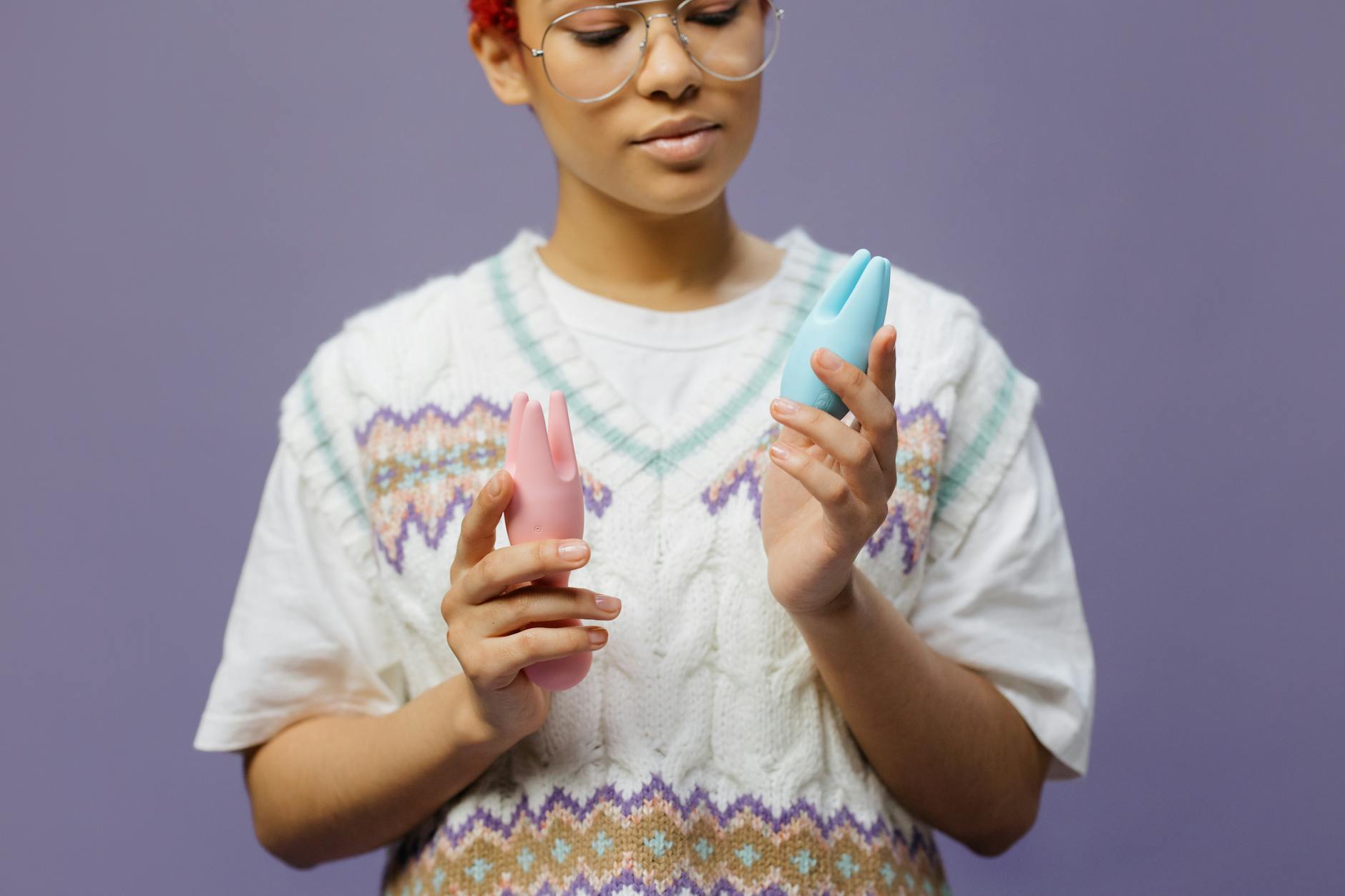
Photo by cottonbro studio on Pexels
The patterns that work best when you're reconnecting
When desire is rebuilding, you don't want to jump to the most intense pattern. You want patterns that feel surprising but not overwhelming.
Start with pattern 1 or 2 on your Lem. These are steady, rhythmic pulses that your nervous system can track and anticipate without becoming numb. As you explore over days or weeks, you'll naturally migrate to the faster patterns. Let that happen on your body's timeline, not a checklist.
Many couples find that mid-range patterns (around 4-6 on the Lem) feel best during partnered sex because they give enough sensation to matter without being so intense that communication breaks down. You need to be able to talk to each other during sex when you're rebuilding intimacy. Overstimulation makes that hard.
When to get professional support alongside this
If desire has been gone for more than a year, there's often something deeper than just routine. Sometimes it's unresolved conflict. Sometimes it's depression or hormonal shifts. Sometimes both people have just accepted that passion dies and stopped trying.
A clitoral vibrator can restart desire. It can't fix ongoing resentment. If you're using this tool and you still feel distant from your partner outside the bedroom, couples therapy might be the actual next step. But honestly, naming that you want to rebuild desire together is often enough to open the door.
FAQ
How do I bring this up to my partner without them feeling insulted?
Start with curiosity, not criticism. "I read that some couples use toys when they want to reconnect. I'm interested in trying something together. Would you be open to exploring that?" Make it about both of you, not about fixing a deficiency.
What if my partner wants to use the lemon vibrator on me but I feel self-conscious?
Start in a dimly lit room where you can't see their face clearly. Keep your eyes closed. Let yourself focus on sensation instead of performance. Most self-consciousness dissolves after the first time because you realize they're focused on what they're doing, not judging you.
Can a lemon clitoral vibrator replace penetration in our sex life?
Not replace, augment. The Lem gives you sensation you weren't getting from penetration alone. Used together, you get novelty and multisensory pleasure. Many couples find this actually deepens penetrative sex because the person with the vulva is more present and aroused.
What if we try this and it doesn't help?
Then the problem isn't sensation. It's likely relational or emotional. A vibrator is a tool for reconnecting with pleasure. It's not a relationship repair kit. But it can give you the information you need to seek the right next step together.
How often should we be using a lemon clitoral vibrator together if we're trying to rebuild desire?
Start with once a week. This keeps novelty alive without making it feel like a chore. You're not trying to have frequent sex. You're trying to remember that pleasure is possible. Frequency builds naturally once desire starts returning.
Is there a way to use a lemon sucker that feels more intimate than solo?
Absolutely. Have your partner hold it while you guide their hand. Or have them experiment with how to use it on you, discovering your body together. The Lem becomes a tool for exploration, not a replacement for physical connection.
What rebuilding actually looks like
Desire doesn't roar back overnight. It rebuilds in small moments. The first time you initiate sex because you want to, not because you should. The first time your partner surprises you with a sensation you weren't expecting. The first time you laugh during sex because you both realize you're finally present together.
A lemon vibrator can accelerate that rebuild. But the real work is the conversation. The willingness to admit that desire matters. The commitment to rediscovering each other's bodies with curiosity instead of habit.
If you're ready to start that work, you have the tools. The rest is just showing up.