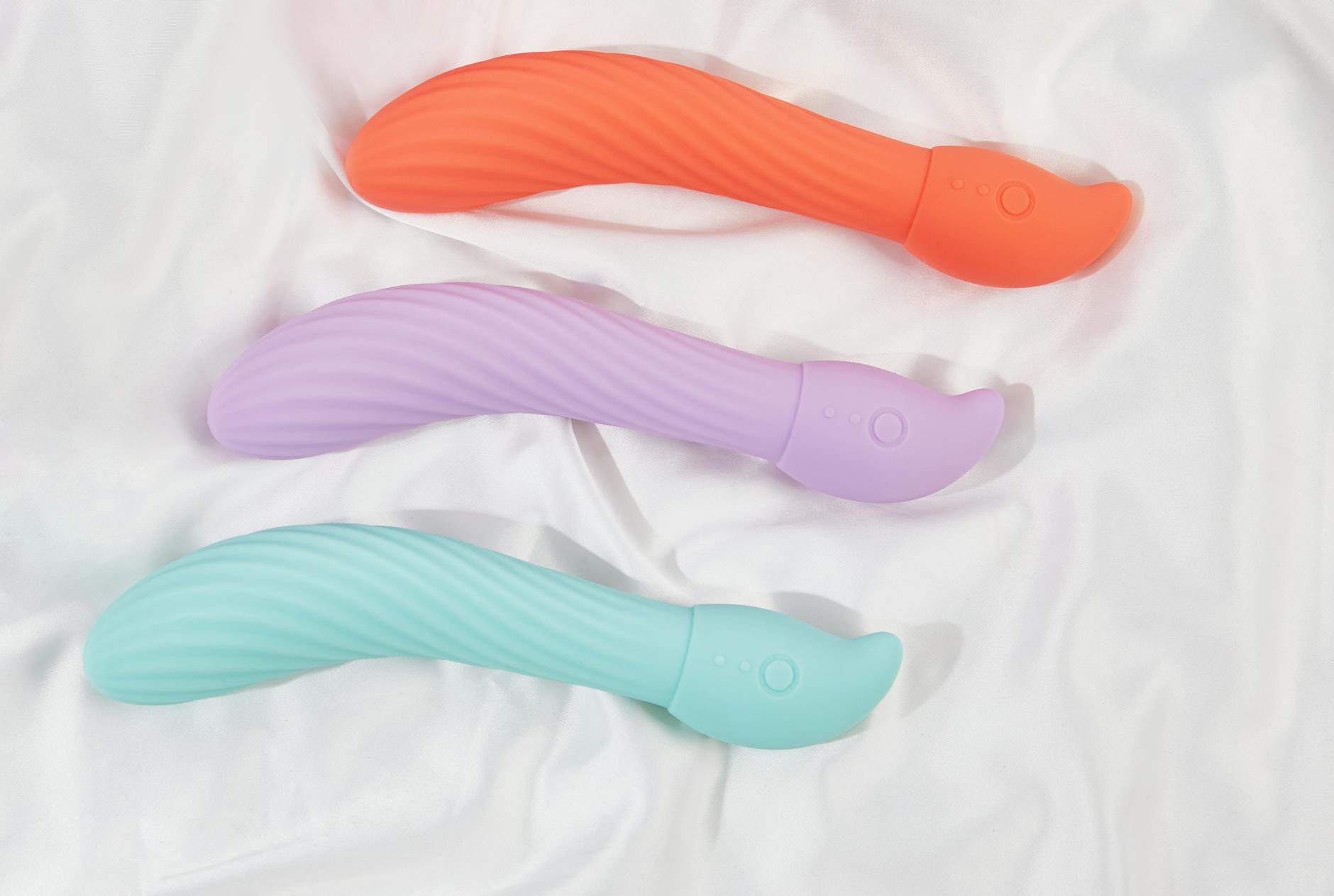
You're twenty minutes into using your lemon clitoral vibrator, and the intensity that felt incredible at minute one has faded into background hum. The device is still running at the same power. Your body has just... stopped noticing it the same way. This is sensory adaptation, and it's not a malfunction of your toy. It's a feature of your nervous system.
I see this happen constantly in my practice, and it confuses people because it feels personal. Like either the vibrator broke or their body did. Neither is true. What's happening is a well-documented neurological response that every body experiences. The good news? It's completely reversible.
Your nervous system is built to detect change, not constants. When pressure, vibration, or sensation stays the same for a while, your sensory receptors slowly stop firing as intensely. It's why you stop noticing the weight of your phone in your pocket or the texture of your sweater after you've been wearing it for an hour.
This happens with all sensation. It's called habituation, and it exists to preserve your nervous system's bandwidth. Your brain would be overwhelmed if every constant stimulus demanded attention. So it learns to filter. The lemon vibrator you're using—whether it's a suction-based model or a traditional vibrator—triggers this same response on the most sensitive nerve endings in your body.
The clitoris has roughly 8,000 nerve endings packed into a small area. All of those nerves communicate with your brain about what's happening. When the same vibration frequency hits those nerves for extended periods, the receptors basically say "okay, we've got this covered" and dial down their signal strength. The vibrator isn't weaker. Your nervous system just stopped treating it as novel.
Longer sessions accelerate sensory adaptation. When you use your lemon clitoral vibrator for 20, 30, or 45 minutes straight at the same intensity level, you're asking your sensory system to maintain peak attention on an unchanging stimulus. That's not how neural systems work.
This is actually a good reason to rethink session length. Most people don't need 40 minutes of vibration to reach orgasm. Research on orgasm frequency suggests that sessions in the 10 to 20-minute range actually produce stronger sensations and more satisfying orgasms than marathon sessions.
I recommend treating your lemon vibrator sessions like interval training. Use it for 5 to 10 minutes, take a break of 2 to 3 minutes, then resume. The break resets your sensory receptors. You'll feel the vibration intensely again on the second round. Your nervous system treats it as new stimulation.
Not all vibration frequencies adapt at the same rate. Lower frequencies (around 20 to 30 Hz) tend to trigger faster adaptation because they're easier for your nervous system to "tune out." Higher frequencies (80 to 100 Hz) take longer to adapt to, partly because they're closer to the natural firing rate of sensitive nerve endings.
Lemon vibrators and other suction-based clitoral toys operate on a different principle than traditional vibrators. Suction creates rhythmic pressure changes rather than direct vibration. This actually slows sensory adaptation because the pressure pattern is inherently varied, even at a constant setting. Your nervous system perceives each pulse as slightly different from the last one.
If you're using a traditional vibrator and noticing fast numbness, switching to a lemon sucker-style toy can genuinely extend the window before adaptation kicks in. The sensation profile is different enough that your sensory system stays engaged longer.
There are four concrete strategies that work immediately.
First, change the pattern or intensity. If you've been on setting three for ten minutes, jump to setting five for 30 seconds, then back down. The sudden change resets your sensory receptors. The intensity change makes the stimulation feel novel again.
Second, take a break and come back. Two to three minutes away from the toy is often enough for your sensory system to recalibrate. When you resume, the sensation will feel sharper and more intense, even though nothing about the vibrator has changed.
Third, move the toy slightly. Angle changes matter. If you've been holding your lemon vibrator in one spot, shift it millimeters in any direction. Your sensory system detects position changes as new information. The clitoris is asymmetrical, and different angles activate different nerve endings. Small position shifts can reset numbness in seconds.
Fourth, add lubricant. This works because lubrication changes how vibration transmits through tissue. With lube, the sensation spreads differently. Without it, vibration is more localized. Switching between the two mid-session creates noticeable sensory novelty.
I work with people who assume they need a stronger vibrator or a different brand of clitoral vibrator to fix numbness. Usually, the issue is technique, not the toy itself. A less expensive lemon vibrator used with rhythm and variation will feel more intense than a high-powered model used in one static position for 30 minutes.
Variation is the key. Your nervous system craves it. Think of it like listening to a song that doesn't change—after 20 minutes, you stop actively hearing it. But if the song shifts key, tempo, or timbre, your attention snaps back. Same principle with your body and your lemon sexual toy.
I also notice that people often use one intensity level exclusively. If you default to setting three every single session, your body expects setting three. By the time you reach it, adaptation has already begun. Switch between settings more frequently. Spend two minutes on setting two, three minutes on setting four, back to two. Your sensory system stays alert.
True sensory numbness that doesn't resolve with breaks or technique changes can signal something else. Hormonal changes, certain medications, or nerve compression can dull genital sensation in ways that feel similar to adapter adaptation but don't respond to pattern variation.
If you're noticing numbness that persists even when you switch toys, change positions, and take breaks, talk to your GP. Nerve issues are treatable, especially when caught early. Diabetes, thyroid dysfunction, and some antidepressants can all change clitoral sensation. A simple conversation with your doctor rules out these variables.
Similarly, if numbness arrived suddenly rather than gradually, that's worth mentioning. Gradual fading over months usually means adaptation. Sudden loss of sensation can mean something else entirely.
Here's what I recommend to clients who want to sidestep adaptation entirely. Use your lemon clitoral vibrator in shorter windows. Fifteen minutes, three times a week, will produce more consistent intense sensations than one 45-minute session weekly. Your nervous system stays fresh.
Rotate toys if you have them. Even switching between a lemon vibrator and another style of clitoral vibrator prevents your body from adapting to any single sensation pattern. Variety is a feature, not a luxury.
And honestly, take pleasure breaks. A week or two where you skip toys entirely and focus on hands-only stimulation resets your entire sensory baseline. When you return to your lemon sucker, it will feel new again. Your nervous system needs novelty, and sometimes the best novelty is absence.
Sensory adaptation isn't a flaw in your body or a sign your vibrator is broken. It's proof that your nervous system is working exactly as designed. Once you understand that, you can work with it instead of against it.
Your sensory receptors are habituating to the vibration frequency. This happens with all repeated stimulation, not just adult toys. Your nervous system prioritizes novelty and change, so constant stimulation feels progressively less intense even though the toy's power output hasn't changed. Breaks, pattern changes, and position shifts reset this adaptation quickly.
No. Your clitoris has thousands of nerve endings, and using a lemon clitoral vibrator doesn't reduce that count. Sensory adaptation is temporary and reversible. Taking breaks and varying your technique restores full sensation. The only way to permanently damage nerve endings is through actual physical trauma, which doesn't happen from normal toy use.
Two to three minutes of no stimulation is often enough for noticeable reset. Some people need five minutes for complete recovery. If you're experiencing deeper numbness, a break of a few hours or a full day can reset your sensory system more thoroughly. This is why shorter sessions with breaks tend to feel better than long continuous sessions.
Yes. Suction-based lemon suckers adapt slower than constant-vibration models because suction creates rhythmic pressure changes that feel inherently varied. Traditional vibrators with fixed frequencies adapt faster. Toys with multiple vibration patterns and intensities also slow adaptation because your nervous system perceives pattern changes as new stimulation.
Different friction, pressure, and movement patterns during partner sex don't create the same sensory adaptation as sustained vibration. The constant variation in a partner's touch keeps your nervous system engaged differently. Some people find that if they use lemon vibrators right before partner sex, they feel less sensation during sex itself. Spacing them out prevents this overlap.
Persistent numbness that doesn't respond to breaks, pattern changes, or position shifts might indicate reduced nerve sensitivity from other causes. Hormonal changes, medications, diabetes, thyroid issues, or pelvic floor tension can all cause genuine reduced sensation. If your numbness is lasting and widespread rather than specific to vibrator use, check in with your GP.
Sensory adaptation is one of those frustrating things that sounds broken but is actually proof your nervous system is healthy. Once you understand it, you can design pleasure practices that work with your neurology instead of fighting it. Shorter sessions, pattern variation, strategic breaks, and position changes keep sensation fresh.
Your lemon clitoral vibrator is still the same toy. Your body is doing exactly what it's supposed to do. The fix isn't upgrading to a stronger vibrator or feeling like something's wrong with you. It's building a sustainable technique that respects how your nervous system actually works.
If you want to talk through what works best for your body and preferences, reach out. That's what I'm here for.