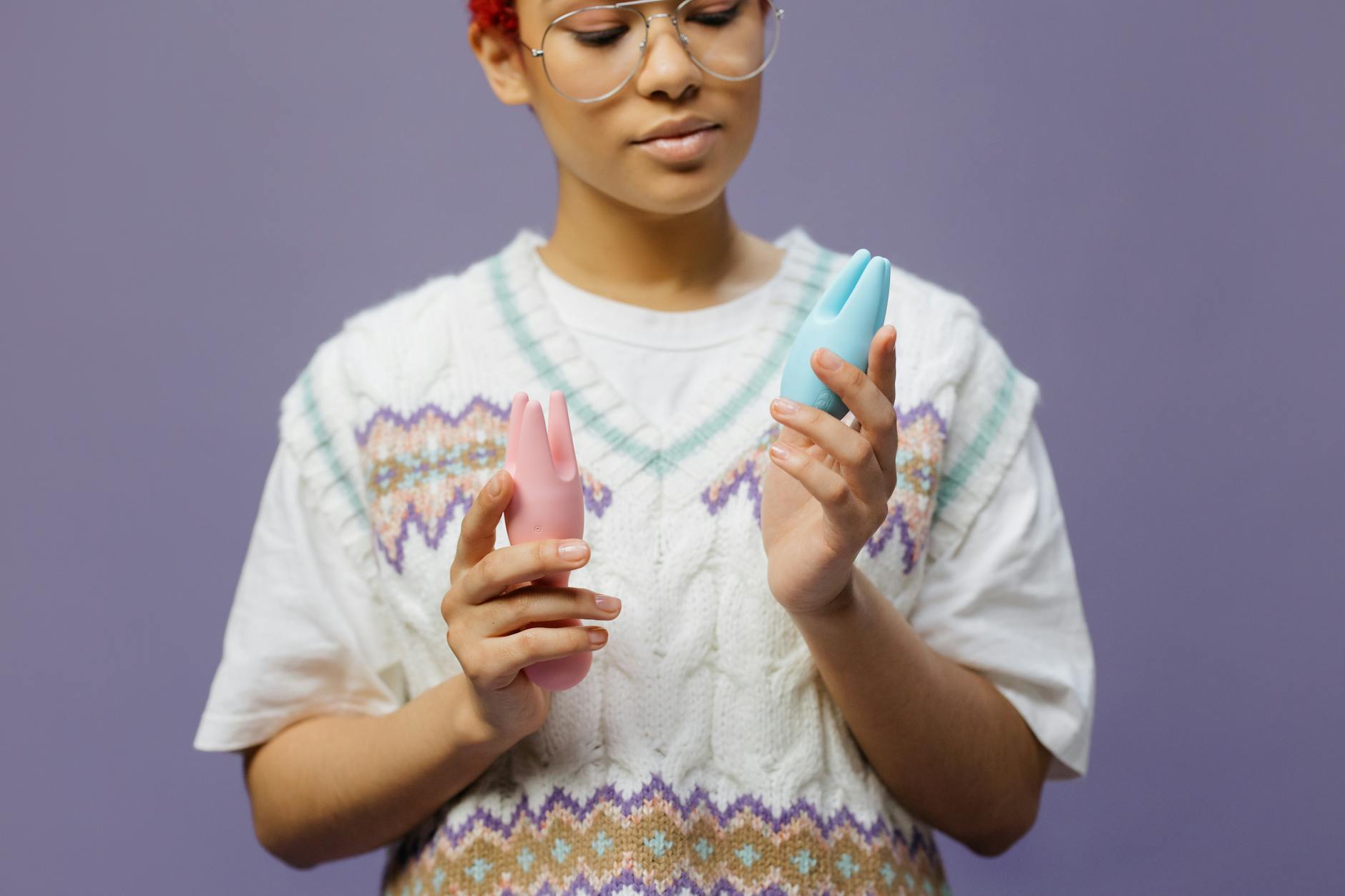
Let's talk about what "sensitive" actually means
Here's the thing: if your clitoris feels too tender to touch directly, or if vibration makes you feel raw rather than good, you're not broken. You're operating with a different nerve configuration than the instruction manual assumes. And honestly, that's where lemon vibrators become absolute game changers.
Most traditional vibrators use direct contact and oscillation. They buzz against tissue. For people with sensitive clitorises, that can feel like too much pressure, too sharp, or honestly painful. Enter air-suction technology. Lemon vibrators use gentle suction rather than vibration, which fundamentally changes how stimulation reaches your nerves.
How air-suction works on sensitive anatomy
A lemon vibrator creates a seal and produces gentle waves of suction around the clitoral area. Instead of friction against tissue, you get a pulsing sensation that draws tissue slightly upward. This sounds subtle, but it's profound for sensitivity.
Here's the physics part: traditional vibrators work through rapid contact repetition. They're banging at speed. Lemon clitoral vibrators work through pressure change. They're creating a rhythm of gentle vacuum and release. Your nerve endings interpret this as stimulation without the mechanical friction that triggers pain or numbness.
For people recovering from childbirth, surgery, or living with conditions like vulvodynia or lichen sclerosus, this distinction saves the whole experience. The tissue stays calm while pleasure still builds.
Why friction-based vibration fails for sensitive clitorises
Think of it like this: if you have a headache, vigorous massage makes it worse. But gentle pressure release feels amazing. The clitoris works similarly when oversensitive.
Traditional vibrators demand that your tissue tolerate repetitive mechanical stimulation. If your clitoris is already inflamed, raw, or simply wired to respond better to pressure change than contact speed, that demand becomes a barrier instead of a gateway.
Sensitivity isn't weakness. It often signals you need a different input altogether. A lemon vibrator respects that signal. The lem vibrator's design means you're never fighting against friction. You're inviting suction. The sensation is encompassing rather than pointed.
Many people tell me that when they switch to air-suction, they finally understand what orgasm is supposed to feel like. Not pushing through discomfort. Not numbness. Actual pleasure.
The pressure setting matters more than you think
Lemon vibrators typically offer 3-8 intensity levels. For sensitive clitorises, this is where the real magic lives. You're not choosing between "hurt" and "not enough."
Start at level 1 or 2. Genuinely. I know the impulse to jump to where other people find pleasure. But lemon suction stimulation at level 1 already delivers more targeted sensation than many people expect. Your body will actually register the waves. It won't feel muted.
Spend a week at level 1. Then week two, try level 2. This sounds slow. It's not. You're letting your nervous system recalibrate and recognize that stimulation doesn't have to hurt to work.
The reason this works is that air-suction doesn't require friction to build sensation. A low setting still creates rhythm, still engages the nerve pathways. You're just protecting tissue while building capacity and confidence.
Position and angle make a huge difference
With traditional vibrators, you're often taught to angle the toy directly at the clitoral head. That works fine for people with less sensitive anatomy. For sensitive clitorises, angle changes everything.
With a lemon vibrator, the seal forms around the whole clitoral mound, not just the tip. This means you have more positioning options without losing sensation.
Try rocking slightly side to side instead of staying perfectly still. Try pressing slightly deeper to change the suction intensity without touching the intensity button. Try starting with the toy over underwear or a thin cloth first. These aren't workarounds. They're intelligent variations that many people with sensitive clitorises find more pleasurable than the "standard" technique.
Lubrication is helpful but not required
Unlike traditional vibrators or penetrative toys, lemon vibrators work with or without additional lube. The suction itself creates a seal. However, a tiny bit of water-based lubricant around the outer opening of the toy can improve the seal quality and make everything feel smoother.
Some people with sensitive tissues find that the absence of lube creates better suction. Others find that lube lets tissue stay more relaxed, which paradoxically increases pleasure. Test both. Your preference isn't wrong either way.
The point is you're not forced into one approach. With friction-based vibrators, you sometimes need lube to tolerate the experience. With air-suction, lube is optional support, not damage control.
Recovery and sensitivity go hand in hand
If you're working through pain after childbirth, pelvic floor dysfunction, or recent surgery, a lemon clitoral vibrator is one of the kindest tools available. It asks nothing of tissue. It doesn't demand inflammation to be gone or swelling to be down. It just offers gentle sensation on whatever timeline your body needs.
Most practitioners I work with recommend air-suction devices like the lem vibrator specifically to clients in post-recovery phases. The research supports this too. Gentle suction doesn't irritate healing tissue the way friction can.
Start even lower than you think you need to. Your nervous system is already managing healing. You're not trying to reach orgasm here. You're just gently re-establishing the signal that pleasure and touch can coexist without pain.
The nervous system piece no one talks about
Sensitivity often has a psychological layer underneath the physical one. If your body has learned that touch means pain, your nervous system tightens in response. That tightness makes everything feel more intense. More painful. It's a loop.
Lemon vibrators can interrupt this loop because they feel different. The sensation is new, non-threatening, and under your complete control. There's no friction to brace against. There's no vibration building to an unpredictable intensity. There's just gentle suction that you can adjust or stop instantly.
This changes the nervous system's threat assessment. Over time, repeated pleasant touch from a device your body has learned is safe rewires the response. The next time a partner touches you, or the next time you touch yourself, your nervous system might release a little more tension.
When to see a professional
If sensitivity comes with pain that doesn't improve after a few sessions with air-suction, that's not a reason to give up on pleasure. It's a reason to check in with a pelvic floor physical therapist or a gynecologist trained in vulvar health. Conditions like vulvodynia, dermatological issues, or muscular tension respond beautifully to professional support.
A lemon vibrator is a tool. A good one, especially for sensitive anatomy. But it works best alongside other support if pain is involved. Don't power through. Combine what works.
FAQ
Is air-suction stimulation less intense than vibration?
Not less intense. Different intense. Air-suction creates a rhythmic, enveloping sensation that many people experience as more intense than vibration, once their body adjusts. Intensity depends on the pressure wave pattern, not the mechanism. A lemon vibrator at level 4 often delivers more noticeable sensation than a traditional vibrator at the same numbered level.
Can I use a lemon vibrator if I have no prior vibrator experience?
Absolutely. Actually, some people find air-suction easier to start with than friction-based options. The sensation is novel but feels less demanding on tissue. Start at level 1, take your time, and let your body learn what it's receiving.
How long until I feel results with a lemon clitoral vibrator if I'm sensitive?
Many people notice improvement in sensation and comfort within 2-3 sessions. Pain or numbness reduction sometimes takes longer. If nothing has shifted in two weeks of regular use, try varying your position, pressure level, or timing (different times of your cycle, for instance). If nothing shifts in a month, consult a pelvic health specialist.
Do I need to relax my pelvic floor for air-suction to work?
Tightness will reduce the quality of suction, yes. But you're not failing if relaxation feels impossible. Tight pelvic floor muscles often develop in response to pain or anxiety. Start by breathing slowly, releasing jaw tension, and letting your legs relax. The suction itself often helps the pelvic floor release naturally over time.
Is air-suction safe for people with vulvar dermatological conditions?
Generally safer than friction-based vibrators, but check with your dermatologist first. The suction creates no friction, so it won't worsen most conditions. But some inflammatory skin conditions do better with zero stimulation for a period. Professional guidance matters here.
Can I combine lemon vibrators with other toys or a partner?
Yes. Many people use air-suction alongside a partner's touch, or alternate with other toys. Some use a lemon vibrator as foreplay and then move to partnered sex. Your sensitive clitoris doesn't dictate one pathway. It just needs respect for its input requirements.
What comes next
Sensitive clitorises aren't a limitation. They're feedback. They're telling you that your particular wiring needs a particular approach. A lemon vibrator listens to that feedback in a way most toys don't.
If you're struggling with sensation, pain during touch, or numbness that makes orgasm feel distant, start here. That piece walks through the exact progression for rebuilding sensation step by step.
Your pleasure deserves tools designed for you. Not tools you have to work around. That's the whole point of air-suction technology. That's why lemon vibrators change things for people with sensitive anatomy. They meet you where you are and ask nothing of tissue that tissue isn't ready to give.